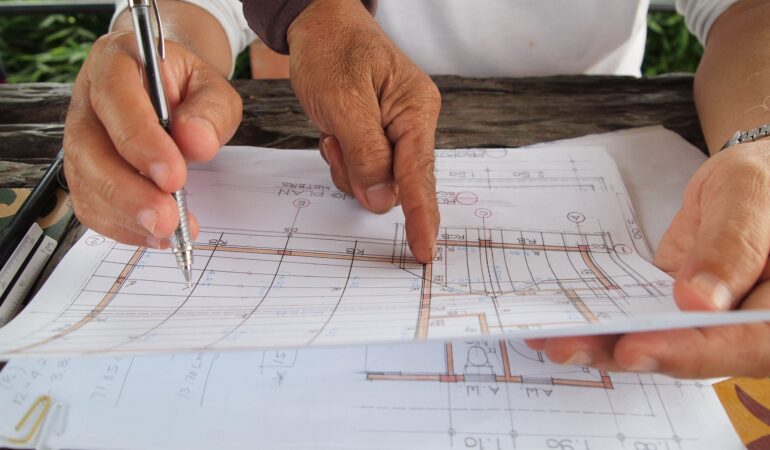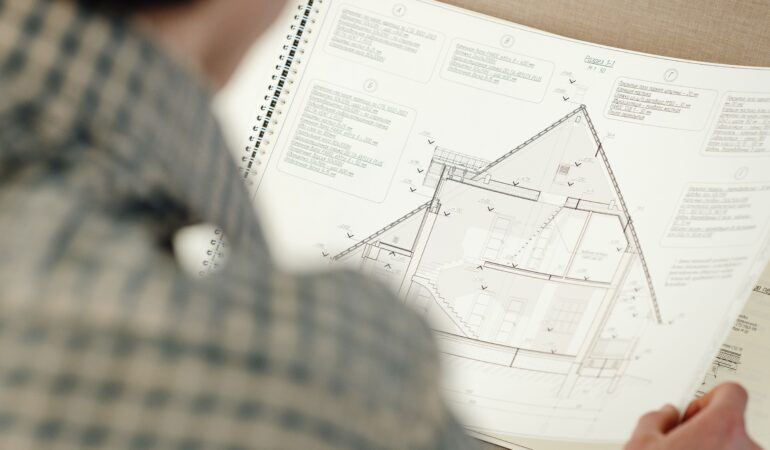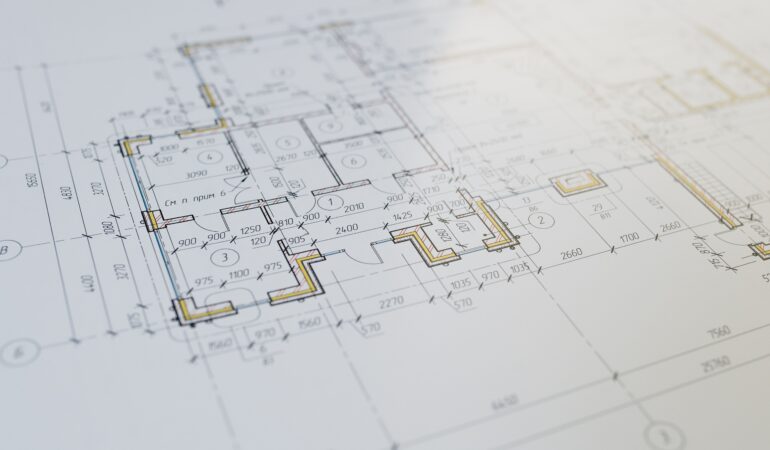

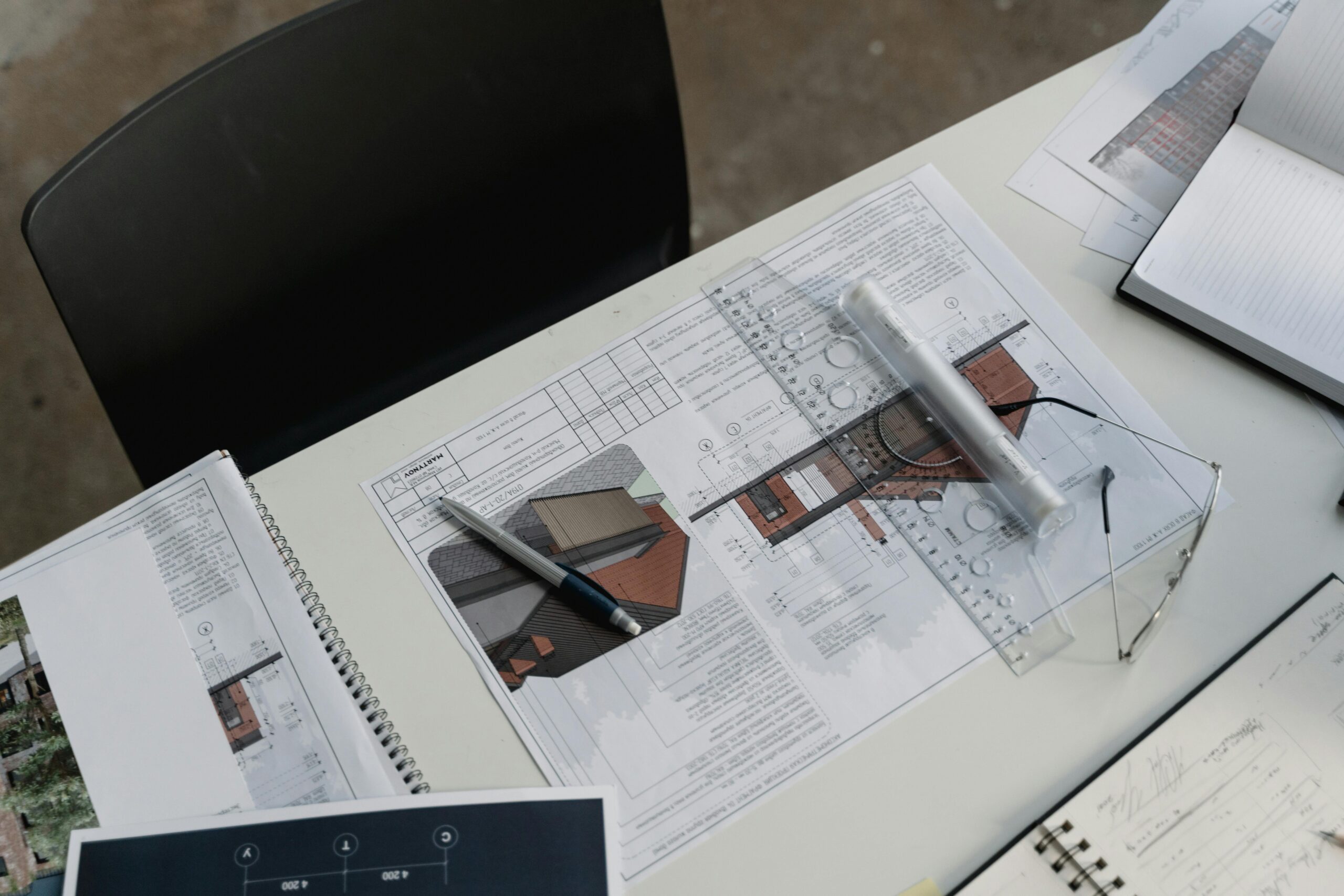
When you choose to work with Noblyn, you’re investing in precision, expertise, and a process built to protect your vision from day one. And like any high-calibre process, ours depends on the right inputs at the right time.
One of the most common reasons construction projects stall — even before a single drawing is produced — is incomplete information at project kickoff. Not missing talent. Not budget. Missing documents.
This guide is written specifically for you, our client, to walk you through exactly what we will ask you for before we begin. The more prepared you are when we sit down together, the faster and more accurately we can move your project forward. Consider this your pre-project preparation roadmap.
We work across five drawing categories: Permit Drawings, Architectural Drawings, Structural Drawings, Civil Drawings, and MEP Drawings. Depending on your project scope, we may need all five or a select few. Here’s what each requires from you.
1. Permit Drawings — What We Need to Get You Legally Approved to Build
Before construction can legally begin on any project — whether it’s your private residence, a commercial property, or a mixed-use development — your local authority must issue a building permit. We prepare and submit those drawings on your behalf. But to do that accurately, we need the following from you.
What You Must Provide
Your project address and legal property description. Not just the street address — we need the formal legal description from your title deed. This is what the municipality uses to identify your parcel, and even a minor discrepancy can result in a permit rejection. Pull this directly from your title document before our first meeting.
A clear scope of work. Tell us exactly what you intend to build. A new home from the ground up, a commercial addition, a full interior renovation, or a temporary structure such as a generator or boiler enclosure — each triggers a different regulatory pathway. The clearer you are upfront, the more accurate our drawings and timeline estimates will be.
Your occupancy type and intended use. Is this a private residence, a commercial retail space, an office building, or an industrial facility? Occupancy classification determines which sections of the building code govern your project. Getting this wrong at the permit stage is one of the most expensive mistakes a client can make — it can force a complete document revision after submission.
A current survey or plot plan. This is a licensed surveyor’s document that shows your property boundaries, any existing structures, and the topography of your site. Without it, we cannot legally place your building on the land. If you don’t have one, we can refer you to surveyors we work with regularly.
Site photographs or a video walkthrough. Before we design anything, we need to understand what exists on your site today — existing structures, access points, vegetation, neighbouring buildings. A clear set of photos or a walkthrough video saves considerable time in early project assessment.
Zoning information: setbacks, lot coverage limits, FAR, and easements. These parameters define your development envelope — the maximum volume and placement your municipality will allow. Your local planning department or a real estate lawyer can provide this. If you’re unsure how to obtain it, ask us and we’ll guide you.
Utility connection points. Where does water enter the site? Where does the sewer line connect? What is the electrical service location? We need this information early so it can be coordinated across all drawing sets without last-minute conflicts.
Previous permits, if this is a renovation. If your property has been built on or modified before, those permit records are part of its legal construction history and must be disclosed in any new submission. Contact your municipality’s permit office to obtain copies if you don’t have them on hand.
What’s Helpful but Not Mandatory
If you already have a structural, MEP, or civil consultant engaged, share their contact details so we can coordinate directly. If your project has a hard deadline — a lease commencement date, a financing condition, or a personal timeline — tell us at the outset so we can align our work accordingly.
A note from our team: We see permit applications delayed most often because of mismatched legal descriptions and missing easement information. These are easy to confirm before you come to us, and doing so puts weeks back in your timeline.
2. Architectural Drawings — What We Need to Design the Right Building for You
Architectural drawings are the heart of your project. They define how your spaces look, how they connect, how they feel, and how they comply with code. Everything we produce in other disciplines flows from a locked, approved architectural design. That’s why the quality of the information you bring us at this stage directly determines the quality of what we design for you.
What You Must Provide
Your space program — a written list of what you need. This doesn’t need to be a formal document. It can be a handwritten list. What rooms do you need? What are their approximate sizes? Which spaces need to be adjacent to each other? For a home, this might mean “a master suite away from children’s bedrooms, a kitchen open to the living area, a dedicated home office.” For a commercial project, it means function-by-function space requirements tied to your business operations. The more specific you are, the better we can serve you.
Number of floors and preferred ceiling heights. These decisions affect structural design, mechanical systems, building height compliance, and your overall construction cost. Come with a preference, even if it’s flexible.
Your preferred layout, concept sketches, or reference images. You don’t need to know architecture to communicate your vision. Show us images you’ve saved, sketch on a napkin, describe what you’ve experienced in buildings you admire. This is one of the most valuable things you can bring to a design meeting, and we build on it.
Door and window preferences. Do you have a preferred material — aluminium, timber, steel? Are you thinking floor-to-ceiling glazing, or more traditional proportions? Do acoustic performance or thermal efficiency matter for specific areas? These details inform our specifications and affect both cost and regulatory compliance.
Accessibility requirements. If your project is a commercial or public building, ADA compliance is not optional — it is a code requirement. For private residences, if you or anyone in your household has accessibility needs, tell us now. Integrating these requirements at the design stage costs a fraction of what it costs to retrofit them later.
What’s Helpful but Not Mandatory
If you have a preferred structural grid from a previous project, or constraints around where mechanical rooms can be located, share them. Any existing MEP coordination constraints — ceiling height restrictions, equipment zones you want to preserve — help us design more efficiently from day one.
A note from our team: The single most expensive revision in architectural work is a layout change requested after structural drawings have been produced. Moving a wall that sits on a structural grid line isn’t a five-minute edit — it can require a full structural redesign. We finalise your layout before we engage the structural. Please take the time to be certain about your program before that milestone.
3. Structural Drawings — What We Need to Engineer Your Building’s Foundations and Frame
Structural drawings cover your foundations, floor and roof framing, load-bearing elements, and construction connections. They are produced by a licensed structural engineer working directly from your finalized architectural plans. Here is what we will need from you at this stage.
What You Must Provide
Your finalized, approved architectural layout. This is the single most important rule of our structural process. Structural work does not begin on a moving target. Once your architectural drawings are locked and you have signed off, we bring in our structural team. Any layout change after that point restarts a significant portion of the structural design. We enforce this boundary to protect your budget and your timeline.
Your survey and plot plan. Required again at this stage to correctly position foundations relative to your property boundaries and existing site conditions.
What’s Helpful and Situation-Dependent
A geotechnical (soil) report. For any project involving a new foundation — particularly on sites with fill, clay, expansive soils, or unknown subsurface conditions — a geotechnical engineer’s report tells us the bearing capacity of your soil and recommends an appropriate foundation type. Skipping this step on challenging sites is a liability that falls on the owner. We will tell you clearly when we believe one is necessary.
Seismic zone, wind, and snow load data. Depending on where your project is located, local climate loads may significantly affect structural sizing and detailing. We pull this from code for most standard projects, but for high-performance or complex structures, additional engineering inputs may be required.
Any special loads or conditions? Heavy rooftop equipment, commercial kitchen loads, retaining walls, or temporary structures integrated into the design — all of these need to be flagged before structural work begins, not discovered mid-design.
A note from our team: We often hear “it’s just a minor change” after structural drawings are well underway. In architecture, minor changes rarely stay minor once you follow them through the structure. Tell us everything upfront, and we will design for it.
4. Civil Drawings — What We Need to Engineer Your Site
Civil drawings address everything at ground level and below: site grading, drainage, stormwater management, utility connections, road access, and erosion control. They are the infrastructure layer that connects your building to the world outside it.
What You Must Provide
A topographic survey. This is the most critical input for civil design and there is no substitute for it. A topographic survey documents the existing grades, contour lines, and elevations across your entire site. Without it, we cannot design drainage, set your finished floor level, calculate earthworks volumes, or confirm that your site can be developed as intended. If you don’t have one, commission it before our civil work begins — we will tell you when.
Boundary survey. Confirms your property limits precisely. This is often combined with your topographic survey but is a distinct deliverable.
Utility connection information. Water supply location and pressure, sewer connection and invert level, stormwater discharge points, and electrical service approach. Your utility providers can furnish most of this — we will tell you exactly what to request from each.
Local regulatory requirements. Your municipality will have specific standards for drainage, stormwater detention, erosion control, and driveway access. If you’ve already had pre-application meetings with your local authority, share those notes with us. If not, we’ll guide you through that process.
Your intended finished floor level and parking requirements. If you have a specific finished floor elevation in mind — based on flood zone requirements, aesthetic preference, or neighbouring building levels — tell us. Parking layout and stall count requirements from your zoning approval are also needed here.
A note from our team: Clients on sloped or irregular sites consistently underestimate the earthworks cost until a topographic survey is in hand. We’ve seen projects where grading costs exceeded the structural budget because the site’s true conditions weren’t assessed early. A survey at the outset of your project is an investment that pays for itself many times over.
5. MEP Drawings — What We Need to Design Your Electrical, HVAC, and Plumbing Systems
Mechanical, Electrical, and Plumbing systems are what make a building livable, functional, and efficient. They are also the discipline where vague early decisions lead to the most expensive late-stage conflicts, because MEP systems compete for the same ceiling cavities, wall chases, and floor voids as your structure and finishes.
What You Must Provide
For Electrical: Tell us your expected electrical load — what major equipment and appliances will the building house? Give us an equipment list with power requirements for anything significant: commercial kitchen equipment, server rooms, EV charging, large HVAC units. Tell us your lighting preferences — do you want integrated smart lighting, dimmers throughout, or specific zones? And where do you prefer the main electrical panel to be located?
For HVAC: What are your heating and cooling expectations? For a luxury residence, this might mean zoned climate control, underfloor heating in specific rooms, and silent operation as a priority. For a commercial project, it might mean a VRF system for energy efficiency or an AHU for large open spaces. Tell us your preferences, and tell us any constraints — low ceiling areas, exposed structure you want to preserve, equipment zones that are off-limits.
For Plumbing: Provide a complete fixture list — every toilet, sink, shower, bathtub, floor drain, hose bib, and commercial appliance that requires a water or drain connection. Tell us your water source and incoming pressure. Tell us whether you want a tankless hot water system, a central storage system, or a heat-exchanger-based solution for larger buildings.
A note from our team: The decision between HVAC system types — particularly whether to use a VRF system versus a traditional ducted AHU — needs to be made before architectural ceilings are finalised. VRF systems require refrigerant line routing through the building fabric. Choosing your system type after walls and ceilings are designed often means reopening architectural decisions you thought were closed. Engage this conversation with us early.
How Noblyn Uses This Information
We collect this information not to create administrative burden — but because it directly determines the quality, accuracy, and speed of everything we produce for you.
Our process follows a deliberate sequence:
First, we gather all required inputs from you before committing to design. We do not begin drawing until we have what we need. This is a discipline we hold firmly, because starting without complete information creates a false sense of momentum that leads to expensive corrections later.
Second, your architectural layout is finalised and approved by you before any structural or MEP work begins. This protects you from the cascading cost of mid-project layout changes.
Third, our structural, civil, and MEP consultants work in parallel from the locked architectural base — coordinated by Noblyn — so all disciplines develop together rather than in sequence. This compresses your timeline significantly.
Finally, all drawing sets are cross-checked against each other before submission. Conflicts are resolved in the drawings, not on your construction site.
This is the Noblyn standard. And it begins with you coming prepared.
Your Pre-Project Preparation Checklist
Before your consultation with Noblyn, work through this list and bring as much as you can:
- Title deed with a formal legal property description
- Licensed topographic and boundary survey
- Site photographs or a video walkthrough of the property
- Zoning confirmation: setbacks, height limits, FAR, and easements
- Previous permits and existing drawings (if renovation or addition)
- Written space program or room-by-room requirements list
- Reference images, sketches, or concept inspiration
- Equipment list for any specialised uses (commercial kitchen, server room, rooftop units)
- Utility connection information from your service providers
- Geotechnical report if your site has known soil challenges
You don’t need everything on this list to have a productive first conversation with us. But every item you bring reduces the time between that first conversation and breaking ground.

Fayaz
Frequently Asked Question - FAQs
No — your first consultation is precisely where we assess what you have and what we need to commission or obtain. What we ask is that you begin gathering these items as early as possible. Projects where clients come prepared move into design weeks faster than those where documentation is assembled after engagement. The checklist above is your guide.
Commission one as soon as you're serious about your project. A topographic and boundary survey typically takes two to four weeks and is required before we can begin civil, structural, or permit work. We maintain relationships with licensed surveyors and can provide referrals on request.
It depends entirely on your project scope. A high-end interior renovation may require only architectural and MEP drawings. A new ground-up construction on a raw site will typically require all five, each requiring its own consultant discipline. We assess this with you at the outset and only engage the disciplines your project genuinely requires.
Documentation gaps are the primary cause of project delays in our experience — not design complexity or contractor availability. Missing a survey can delay civil and structural work by a month. Missing previous permit records can stall a permit submission entirely. We are transparent with you about how missing information affects your timeline so you can make informed decisions about prioritising what to collect.
Because any change to a structural element — a relocated load-bearing wall, a shifted column, an added opening — after structural drawings are produced requires the structural engineer to revisit calculations, revise drawings, and potentially re-engineer portions of the foundation or frame. What looks like a small architectural change can become a significant structural revision. Locking the layout first is how we protect your budget and keep your project on schedule.