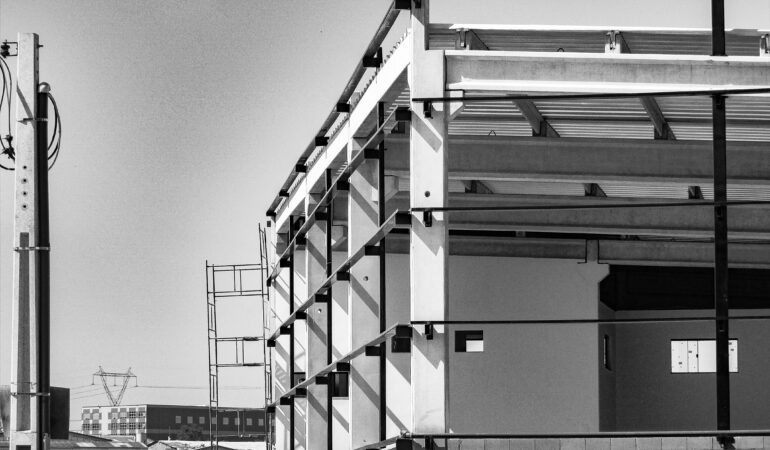


Here is a scenario that plays out on construction sites with disheartening regularity. The structural steel is up, the mechanical contractor has begun installing ductwork, and the plumbing contractor is roughing in drain lines. Then someone notices that a 24-inch supply air duct runs directly through the path of a structural beam — a beam that has already been welded into place. The duct cannot go through the beam. The beam cannot move. The architect’s drawings show the duct at one elevation; the structural drawings show the beam at the same elevation. Nobody caught it in the office.
What follows is a field coordination meeting, a request for information (RFI) submitted to the engineer of record, a revised routing solution developed under time pressure, a change order to the mechanical contractor for the rerouted duct run, potential changes to ceiling heights in the affected area, and a ripple of rescheduling as other trades waiting to follow the mechanical work are delayed. A conflict that would have taken an hour to resolve in a design coordination meeting costs days of schedule and tens of thousands of dollars to resolve in the field.
This is the problem that MEP coordination and clash detection exist to solve — and understanding how they work, what they require, and what distinguishes a project that does it well from one that does it poorly is knowledge that directly protects your investment.
What MEP Coordination Actually Means
MEP stands for mechanical, electrical, and plumbing — the three primary building systems disciplines whose work must occupy the same limited space within a building’s floor-to-floor assemblies, above ceilings, in wall cavities, in mechanical rooms, and through shafts and chases. In any building beyond the most basic residential construction, these systems are dense, complex, and geometrically demanding in ways that are not always apparent from looking at individual discipline drawings in isolation.
MEP coordination is the process of integrating the drawings and models of all building systems disciplines — including structural — into a unified representation and systematically identifying conflicts before they become field problems. It is a design-phase activity, not a construction-phase one. Its purpose is to resolve in the office what would otherwise be resolved on the job site, where the cost of resolution is measured not in hours of design time but in contractor labor, material waste, schedule delay, and the compounded costs of cascading trade impacts.
The term is sometimes used narrowly to refer only to above-ceiling coordination — the zone above suspended ceilings where ductwork, piping, conduit, and structural members compete for vertical clearance. In practice, comprehensive MEP coordination addresses the entire building: mechanical rooms, vertical shafts, wall cavity conditions, slab penetrations, roof equipment and curb locations, electrical room clearances, and any location where the density of systems creates potential for conflict.
Why Conflicts Happen: The Fundamental Problem of Disciplinary Silos
To understand why MEP coordination is necessary, it helps to understand why conflicts exist in the first place. Buildings are designed by teams of specialized professionals — architects, structural engineers, mechanical engineers, electrical engineers, plumbing engineers, civil engineers — each of whom develops their drawings largely within their own disciplinary context, using their own software tools, working from their own set of assumptions about what other disciplines are doing.
Even on well-managed projects with good communication, the sheer volume of design decisions made across disciplines creates opportunities for conflict. A mechanical engineer sizing ductwork for a given system performance may route a trunk duct at an elevation that seemed available on their drawings — but the structural engineer, working independently, designed a transfer beam at that same elevation that does not appear on the mechanical engineer’s drawing set. Neither made an error within their own discipline. But the two designs are physically incompatible.
Multiply this across every discipline, every floor, every zone of the building, and the probability of undetected conflicts in a complex project is not low — it is virtually certain without a systematic coordination process. Studies of construction project performance consistently identify design coordination failures as among the leading causes of field change orders, schedule delays, and cost overruns.
What Clash Detection Is — and What It Isn’t
Clash detection is the computational process of analyzing a three-dimensional building model — populated with the geometry of structural, architectural, mechanical, electrical, and plumbing systems — and identifying locations where elements from different disciplines occupy the same physical space or violate required clearance distances.
A hard clash is a direct physical interference: a duct passing through a beam, a pipe routing through a column, a conduit conflicting with a structural connection. Hard clashes are geometrically definitive — two solid objects cannot occupy the same space, and the detection software identifies the intersection with precision.
A soft clash (also called a clearance clash or proximity clash) is a condition where two elements do not physically intersect but are closer together than the minimum clearance required for code compliance, installation access, or maintenance. Examples include a high-voltage electrical conduit too close to a water line, ductwork with insufficient clearance for insulation thickness, or a sprinkler main that cannot be maintained without removing adjacent piping. Soft clashes are often more insidious than hard clashes — they pass visual review more easily but create real problems in the field and over the building’s service life.
A workflow clash (sometimes called a 4D clash) is a temporal conflict — two construction activities that cannot occur simultaneously in the same location as scheduled. This is a more sophisticated level of analysis, typically reserved for complex phased projects or projects with aggressive schedules where sequencing conflicts can delay critical path activities.
It is important to be precise about what clash detection is not. It is not a substitute for engineering judgment. The software identifies conflicts — it does not resolve them. Every clash detected must be reviewed by the relevant engineering disciplines and resolved through a deliberate design decision: one element is rerouted, an elevation is adjusted, a system is redesigned. The value of clash detection is that it surfaces these decisions in the design phase, where they can be made thoughtfully by the engineers of record, rather than in the field, where they are made reactively under time pressure.
BIM: The Foundation of Effective Clash Detection
Clash detection requires three-dimensional models — and the creation, coordination, and management of those models is the domain of Building Information Modeling (BIM). BIM is a methodology and a category of software tools (Autodesk Revit being the most widely used in the United States) that represent buildings as intelligent three-dimensional models rather than two-dimensional drawings.
In a BIM workflow, each discipline develops its design in a three-dimensional model rather than — or in addition to — traditional two-dimensional CAD drawings. The structural engineer models every beam, column, and connection. The mechanical engineer models every duct, fitting, and piece of equipment. The plumbing engineer models every pipe, valve, and fixture. The electrical engineer models cable trays, conduit runs, and equipment. The architect models walls, floors, ceilings, and architectural elements.
These individual discipline models are then federated — combined into a single coordinated model using clash detection software such as Autodesk Navisworks or Solibri Model Checker. The federated model allows the entire project team to see all systems simultaneously in three dimensions, run automated clash detection algorithms, and review the resulting clash report in a systematic coordination workflow.
The quality of the clash detection output is directly dependent on the quality of the input models. A mechanical model that represents ductwork as centerline paths without actual dimensions, or an electrical model that omits cable trays and shows only conduit stubs at equipment, will not detect the clashes that actually exist in the real system. Model development standards — specifying what elements must be modeled at what level of detail — are a critical project management requirement for effective BIM coordination.
The Level of Development Framework
The construction industry uses a standardized framework called Level of Development (LOD) to specify how completely and reliably a BIM element represents the corresponding real-world component. LOD is defined on a scale from 100 to 500:
LOD 100 represents a conceptual element — essentially a placeholder with approximate geometry and no reliable dimensional accuracy.
LOD 200 represents an approximate element with generalized geometry — useful for early-stage coordination but not for detailed clash detection.
LOD 300 represents a specific element modeled with precise geometry, dimensions, location, and quantity — sufficient for detailed coordination and clash detection. This is the minimum LOD at which meaningful MEP coordination can occur.
LOD 350 adds the interface information required for coordination with other building systems — connection points, clearance zones, and handoff conditions between disciplines.
LOD 400 represents fabrication-level detail — the model is accurate enough to drive fabrication directly.
LOD 500 represents the as-built condition — verified in the field and representing what was actually constructed.
For MEP coordination purposes, the industry standard target is LOD 300 to 350 for all coordinated systems. Projects where some disciplines model at LOD 300 while others model at LOD 200 will have coordination gaps — the lower-LOD elements are not geometrically reliable enough to trust the clash results they participate in.
The MEP Coordination Workflow: How It Works in Practice
Effective MEP coordination is not a single event — it is a sustained process that runs through the design and pre-construction phases. Understanding the workflow helps project owners evaluate whether their design team is actually doing this work or simply claiming to.
Step 1: Establish BIM Execution Plan and Modeling Standards
Before coordination begins, the project team documents the BIM Execution Plan (BxP) — the project-specific agreement governing how models will be developed, exchanged, and coordinated. The BxP specifies model authoring software and versions, file exchange protocols, coordinate systems and datums, LOD requirements by discipline and phase, clash detection software and process, and the schedule for coordination meetings. Without a BxP, coordination workflows are improvised, inconsistent, and frequently ineffective.
Step 2: Discipline Model Development
Each engineering discipline develops its system model to the specified LOD, working from the coordinated architectural model that establishes the spatial framework — floor-to-floor heights, ceiling heights, shaft locations, and structural grid. The architectural and structural models are typically the reference models — the fixed framework within which MEP systems must route.
Step 3: Federation and Initial Clash Detection Run
The discipline models are federated into the coordination platform and an initial automated clash detection run is performed. On a complex commercial project, this initial run may produce thousands of clash results — a number that is less alarming than it sounds, because many initial clashes are duplicates, minor overlaps of insulation modeled at insufficient tolerance, or conditions that are already known and accepted. The raw clash report must be processed and triaged.
Step 4: Clash Triage and Prioritization
Not all clashes are equal. The coordination team reviews the raw clash results and categorizes them: hard clashes requiring immediate resolution, soft clashes requiring clearance review, and duplicate or acceptable conditions to be filtered from the working report. Priority is assigned based on construction sequence — clashes in areas scheduled for early construction must be resolved before those in areas with later start dates.
Step 5: Coordination Meetings and Issue Resolution
The project team — typically the BIM coordinator, mechanical engineer, electrical engineer, plumbing engineer, structural engineer, and architect — meets regularly (weekly on active coordination projects) to work through the prioritized clash list. Each clash is assigned an owner, a proposed resolution is developed, and the resolution is modeled and re-checked to verify that the fix does not create new conflicts downstream.
This iterative process continues until the clash count is driven to an acceptable level — ideally zero hard clashes and a managed set of accepted soft clashes — before the documents are issued for construction.
Step 6: Coordination Drawing Issuance
Once the coordinated model is resolved, coordination drawings are extracted and issued to contractors. On projects using virtual design and construction (VDC) delivery methods, contractors may use the coordinated BIM model directly for fabrication and installation. On more traditional delivery methods, the coordination drawings supplement the engineer-of-record drawings as the installation reference.
The Economics of Clash Detection: Where the Savings Come From
The ROI argument for MEP coordination and clash detection is well-supported by industry data, but understanding where the savings actually come from clarifies why the investment is justified across a wide range of project types and sizes.
Change Order Cost Reduction
Field-discovered MEP conflicts generate change orders — formal contract modifications that compensate contractors for work outside the original contract scope. Change orders for MEP conflicts typically carry a premium: the work is performed reactively, often on a time-and-materials basis, in conditions where the original installation sequence has already been compromised. Industry benchmarks suggest that each major MEP field conflict costs between $5,000 and $50,000 to resolve in change orders alone, depending on the system involved, the degree of completed work that must be modified, and the trade impact. On a complex commercial project, eliminating twenty to thirty field conflicts through pre-construction coordination represents savings that significantly exceed the coordination investment.
Schedule Compression Avoidance
MEP conflicts discovered in the field stop work at the affected location while the conflict is resolved — a process that takes days to weeks depending on the complexity of the resolution and the responsiveness of the engineering team. Because mechanical, electrical, and plumbing work is typically on the critical path for subsequent activities — above-ceiling close-in, drywall, flooring, and finish work cannot proceed until rough-in is complete and inspected — MEP conflicts directly translate to project schedule delays. On projects with completion date penalties or revenue-dependent occupancy dates, schedule delays have costs that dwarf the direct change order amounts.
Reduced RFI Volume
RFIs — Requests for Information — are the formal mechanism by which contractors ask the design team to clarify or resolve ambiguities in the construction documents. A significant fraction of RFIs on typical construction projects relate to MEP conflicts and coordination gaps in the drawings. High RFI volumes consume architect and engineer time, slow field decision-making, and are a reliable indicator of documentation quality problems. Projects with thorough MEP coordination consistently generate fewer RFIs, allowing the design team to focus on substantive construction phase issues rather than reactive conflict resolution.
Prefabrication Enablement
One of the less-discussed benefits of high-quality MEP coordination is that it enables mechanical and plumbing contractors to prefabricate pipe and duct assemblies off-site in controlled shop conditions. Prefabrication requires precise, conflict-free coordination drawings that guarantee the prefabricated assemblies will fit when delivered to the site. A coordinated BIM model is the foundation of an effective prefabrication program — and prefabrication, where applicable, delivers meaningful labor cost savings and quality improvements over stick-built field installation.
Common Mistakes That Undermine MEP Coordination
Starting Coordination Too Late
MEP coordination is most valuable when it begins early enough that system routing decisions are still flexible. Coordination that begins after structural steel is ordered, or after mechanical equipment is procured with fixed connections, has a significantly reduced ability to achieve optimal resolutions. The structural model and major equipment selections should be the first inputs to the coordination process — not additions made after MEP routing is largely complete.
Treating Coordination as a Contractor Responsibility
On design-bid-build projects, some owners and architects leave MEP coordination to the contractors — expecting them to resolve conflicts during construction. This is a misunderstanding of both the purpose of coordination and the economics of who bears the cost of field conflicts. Contractors who encounter MEP conflicts they did not create have every contractual right to submit change orders for the resolution work. The cost of those change orders is borne by the owner. Pre-construction coordination by the design team prevents these costs; post-construction resolution by contractors charges them back to the owner at a premium.
Accepting Low-LOD Models as Coordination-Ready
The most common failure in BIM coordination is a gap between the declared LOD of the models and their actual geometric reliability. Mechanical models with duct centerlines but no fitting geometry, electrical models with approximate equipment footprints but no cable tray routing, and structural models missing connection details are all insufficient for reliable clash detection. The coordination team must enforce LOD requirements before running coordination and flag discipline models that do not meet the specified standard.
Failing to Coordinate Clearance Requirements
A coordination process focused exclusively on hard clashes — physical intersections — misses a significant category of constructability and maintainability problems. Code-required clearances around electrical panels, maintenance access requirements for mechanical equipment, and installation clearances for pipe insulation are all soft-clash conditions that must be modeled and checked. Buildings with adequate physical clearance between systems but inadequate maintenance access create service problems that persist throughout the building’s occupancy.
Insider Tips: What the Best Project Teams Do Differently
Appoint a dedicated BIM coordinator — not a discipline engineer wearing two hats. On complex projects, the role of managing the coordination model, running clash detection, maintaining the issue log, and facilitating resolution meetings is a full-time responsibility during active coordination phases. Assigning it as a secondary duty to a discipline engineer who is simultaneously producing their own drawings produces neither good drawings nor good coordination.
Require the structural engineer’s model first. The structural system is the fixed framework within which all MEP systems must route. A coordination process that begins before the structural model is complete and reliable will generate clashes that are resolved only to resurface when the structural model is updated. Structural model completeness and LOD should be confirmed before MEP routing commences in earnest.
Use issue tracking software, not spreadsheets. Clash coordination generates hundreds to thousands of issues that must be tracked through resolution, assignment, and verification. Managing this in a spreadsheet is inefficient and error-prone. Dedicated coordination platforms — Autodesk BIM 360 Coordinate, Procore, Newforma — provide issue tracking, model linking, and resolution verification workflows that are appropriate to the scale of the task.
Document accepted clashes explicitly. Not every soft clash requires resolution — some are accepted conditions where the relevant parties have reviewed and approved the condition as constructible and maintainable. These accepted clashes must be documented with a specific rationale, so that they are not re-flagged in subsequent coordination runs and are not discovered during construction by a contractor who does not know the condition was reviewed and accepted.

Fayaz
Frequently Asked Question - FAQs
MEP clash detection is the computational process of analyzing a three-dimensional federated building model — containing the structural, mechanical, electrical, and plumbing systems — to identify locations where elements from different disciplines physically conflict or violate required clearances. It is performed using clash detection software such as Autodesk Navisworks during the design and pre-construction phases, before any physical construction occurs. The goal is to identify and resolve conflicts in the design office — where resolution is inexpensive and flexible — rather than in the field, where the same resolution carries the cost of contractor change orders, material waste, and schedule delay. Effective clash detection requires three-dimensional BIM models from all contributing disciplines developed to a minimum Level of Development 300.
The savings from MEP clash detection are project-specific and depend on building complexity, system density, and the number of conflicts that would otherwise reach the field unresolved. Industry research and project case studies consistently document ROI ratios of 10:1 to 40:1 for BIM coordination investment — meaning every dollar invested in pre-construction coordination returns ten to forty dollars in avoided field costs. On a mid-size commercial project of 50,000 to 100,000 square feet, it is realistic to attribute $200,000 to $500,000 in avoided change orders and schedule costs to a thorough MEP coordination process. On larger or more complex projects, the figure is proportionally higher. For luxury residential and high-end custom construction, where the density of systems in tight ceiling cavities and the cost of premium finishes makes field conflicts particularly expensive, coordination investment is equally well-justified.
No — though the coordination tools and workflows scale with project complexity. Large commercial projects with high MEP system density, tight above-ceiling zones, and complex mechanical equipment benefit most from full BIM coordination and automated clash detection. However, multi-family residential projects, mixed-use buildings, and even high-specification custom homes have enough MEP complexity to warrant systematic coordination. For smaller projects, the coordination workflow may be simpler — 3D models reviewed visually in federated view rather than run through automated detection algorithms — but the fundamental discipline of integrating all systems before construction begins applies regardless of project scale. The question is not whether coordination is worthwhile but what level of coordination formality is appropriate for the project's complexity and budget.
The most widely used clash detection platform in the United States is Autodesk Navisworks, which accepts model files from Revit, AutoCAD, and most other BIM authoring tools and provides both automated clash detection and a collaborative issue management interface. Solibri Model Checker is another capable platform widely used in Europe and increasingly in the US, with strong rule-based checking capabilities. Trimble Connect and Bentley ProjectWise offer coordination environments for projects using those software ecosystems. The clash detection software is distinct from the BIM authoring software — Autodesk Revit, for example, is the dominant model authoring platform, and Navisworks is the coordination and clash detection platform. Most project teams use Revit for authoring and Navisworks for coordination, though integrated platforms are increasingly combining these functions.
MEP design is the engineering work of sizing and selecting the mechanical, electrical, and plumbing systems — calculating heating and cooling loads, sizing ductwork and piping, designing electrical distribution, specifying equipment. MEP coordination is the spatial integration work of routing those designed systems through the building without conflicting with each other or with the structural and architectural elements. Both are necessary, and neither substitutes for the other. An MEP engineer who has designed a correct system but routed it without coordination may produce drawings that are engineered correctly in isolation but physically unbuildable as drawn. MEP coordination ensures that the correctly engineered systems are also correctly located in three-dimensional space — and that every trade can install their work in the sequence required without conflict.