
The Question Every Developer Eventually Asks
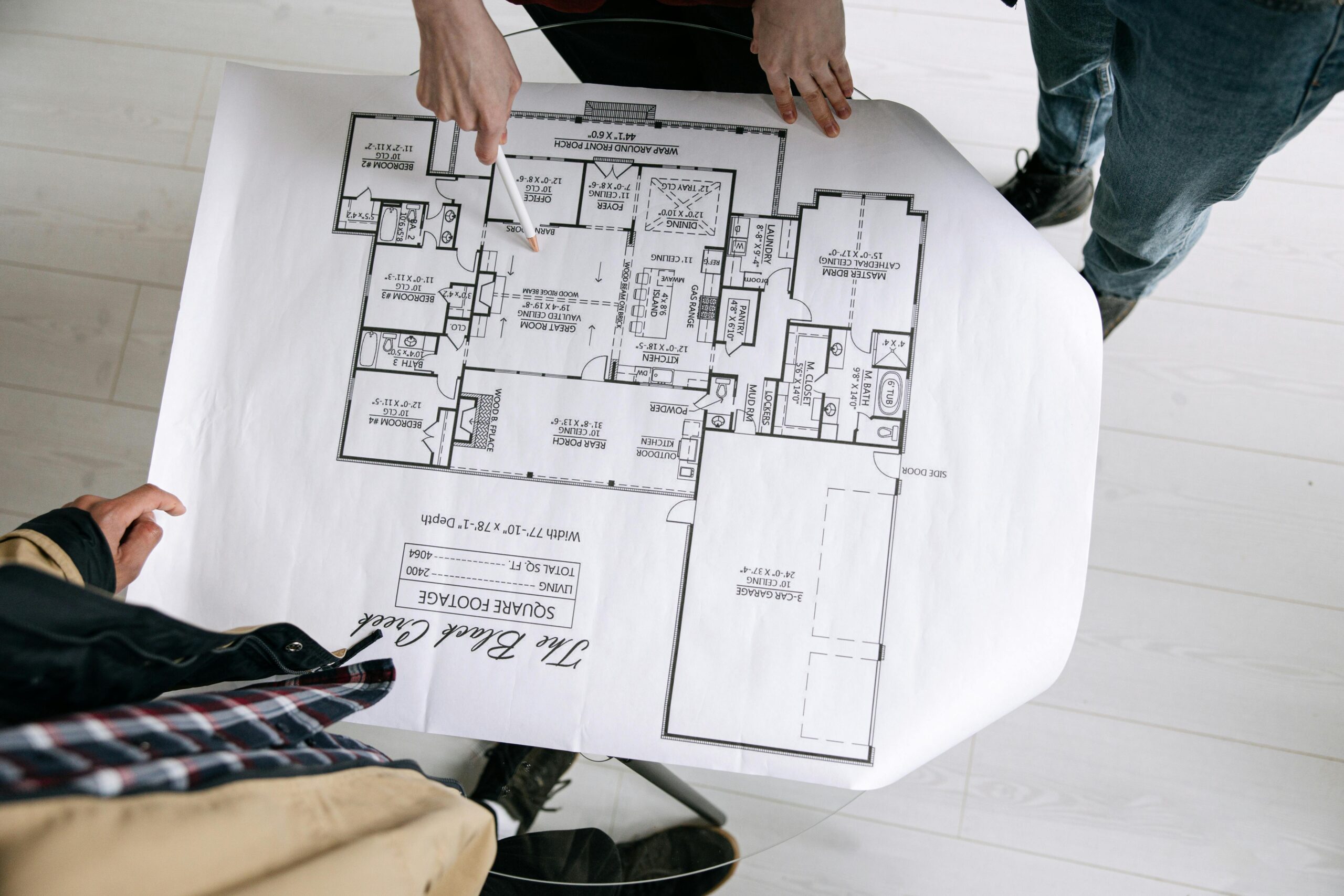
You have your architectural drawings. The floor plans look great. The elevations are clean. Your architect has done their job. Then your contractor asks: “Where are the structural drawings?” — and suddenly you’re looking at a gap in your permit package that’s about to cost you weeks.
It happens more often than you’d think, even on projects managed by experienced developers. Architectural drawings show what a building will look like. Structural drawings show how it will stand up. And until a building department has both — reviewed, coordinated, and code-compliant — your permit is not coming.
This post is the definitive guide to what structural drawings are, what they contain, why every building department in the country requires them, and what happens when they’re done poorly. If you’re a homeowner planning a major build, a real estate investor budgeting a development, or a contractor who wants to know exactly what to hand a structural engineer, read every word of this.
Our team provides end-to-end architectural, structural, and MEP coordination to ensure your plans are compliant and ready for approval. Don’t let documentation delays hold you back.
Ready to turn your vision into a permit-ready project?
What Are Structural Drawings?
Structural drawings are a set of engineering documents that define the complete load-bearing system of a building — from the foundation buried in the ground to the last connection at the roof ridge. They are prepared by or under the responsible charge of a licensed Structural Engineer (SE) or, for simpler projects in some jurisdictions, a licensed Civil Engineer (CE) with demonstrated structural competency.
Where architectural drawings communicate design intent — room layouts, ceiling heights, exterior materials, window placements — structural drawings communicate engineering intent: how forces travel through the building, how each member is sized to carry those forces safely, and how every connection transfers load from one element to the next without failure.
The distinction is not merely technical. It is legal. In the United States, a structural drawing submitted for permit review carries the professional seal of a licensed engineer who is staking their registration — and their professional liability — on the statement that the structure has been designed to meet the applicable engineering standards and building codes.
That seal means something. It means a qualified professional has done the math.
Why Building Departments Require Structural Drawings
The requirement for structural drawings is not bureaucratic box-checking. It exists because structural failure kills people.
Building codes in the United States — primarily the International Building Code (IBC) for commercial projects and the International Residential Code (IRC) for one- and two-family dwellings — mandate that permitted construction demonstrate compliance with minimum structural performance standards. These standards define how much load a floor must carry without deflecting excessively, how much lateral force a building must resist before it falls over in an earthquake or hurricane, and how deep a foundation must be to avoid failure when the soil beneath it shifts.
A building department plan reviewer cannot verify structural adequacy from architectural drawings alone. The architectural drawings show that a beam exists — the structural drawings show that the beam is the right size, the right material, and connected at both ends in a way that safely transfers the load it carries to the elements below it.
Without structural drawings, there is no engineering verification. Without engineering verification, there is no permit.
This is true for virtually every project involving structural elements in the United States — new construction, significant additions, load-bearing wall modifications, deck and balcony additions, and any project in a seismic or high-wind design zone.
The Anatomy of a Structural Drawing Set
A complete structural drawing package for a typical residential or commercial project includes the following components, each serving a specific and essential role in the permit review and construction process.
Foundation Plan
The foundation plan is the starting point of every structural drawing set — because structurally, the foundation is where everything begins. Every load imposed on the building — the weight of the structure itself, the people and furniture inside it, the snow on the roof, the pressure of the wind against its walls — travels down through the structural system and arrives, ultimately, at the foundation. If the foundation is inadequate, nothing above it is safe regardless of how well it is designed.
A permit-quality foundation plan shows:
- Footing size and depth — the width and thickness of every continuous and spread footing, designed to distribute the load from the structure over a sufficient area of soil that the bearing pressure does not exceed the allowable capacity of the soil beneath
- Reinforcement layout — the size, spacing, and placement of every reinforcing bar (rebar) within concrete footings, grade beams, and slabs. Rebar is what gives concrete its tensile strength — without it, concrete in tension cracks and fails
- Anchor bolt pattern — the size, spacing, and embedment depth of anchor bolts that connect the wood or steel superstructure to the concrete foundation. These bolts are critical for lateral load resistance — they are what keeps the building from sliding off its foundation in an earthquake or high-wind event
- Slab reinforcement — where a slab-on-grade is used, the reinforcement schedule, thickness, and subgrade preparation requirements
- Foundation notes — references to the governing geotechnical report where one exists, concrete strength specifications, and inspection requirements
Insider insight: One of the most common and costly structural errors on residential projects is designing a foundation without accounting for the actual soil conditions at the site. Standard residential foundations are designed assuming a minimum soil bearing capacity — typically 1,500 to 2,000 pounds per square foot (psf). If the actual soil at your site has a lower bearing capacity due to expansive clay, fill, or poor compaction, a standard foundation design will be inadequate. A geotechnical investigation (soils report) prior to structural design is money well spent on any project where soil conditions are unknown.
Floor and Roof Framing Plans
Framing plans show the complete structural layout for each elevated floor level and the roof — every joist, beam, post, and column, with sizes, spans, and spacing clearly indicated.
Floor framing plans document:
- Joist layout — direction, spacing, and species/grade for wood joists, or size and weight for steel joists
- Beam sizes and spans — every primary beam carrying load from joists to posts or walls, sized for the calculated tributary area (the floor area contributing load to that beam) and the applicable live and dead loads
- Post and column locations — where vertical load is concentrated and transferred to the foundation below
- Floor penetrations — openings for stairs, mechanical shafts, and plumbing chases, with headers and trimmers sized to redistribute load around the opening
- Deflection criteria — the maximum allowable deflection under load, typically L/360 for floors under live load, where L is the span length. This is what prevents the disconcerting bounce you feel on a poorly engineered floor
Roof framing plans document:
- Rafter or truss layout — the complete geometry of the roof framing system, including ridge beams, hip and valley rafters, and ceiling joists
- Roof loading — dead load (roofing materials, sheathing, insulation), live load (maintenance workers), and snow load where applicable, calculated based on the ground snow load for the project’s geographic location per ASCE 7
- Uplift connections — the hardware that connects rafters or trusses to the wall plates and prevents the roof from being lifted off the building in high-wind events. In hurricane zones, these connections are one of the most scrutinised elements in the entire structural package
Shear Wall Schedule and Layout
This is the component of the structural drawing set that most non-engineers find most surprising — and it is one of the most critical.
Buildings are exposed to lateral forces: wind pushing horizontally against the building’s walls, and seismic ground motion shaking the building’s base. These lateral forces must be resisted by a Lateral Force Resisting System (LFRS) — and in wood-framed construction, that system is built primarily from shear walls.
A shear wall is a structural wall panel — typically plywood or oriented strand board (OSB) sheathing nailed to wood framing — that is designed and detailed to resist in-plane lateral forces. The sheathing, the nailing pattern, the hold-down hardware at the ends of the wall, and the anchor bolts connecting the wall to the foundation all work together as a system to transfer lateral forces safely from the roof level down through the walls and into the foundation.
The structural drawings must include:
- Shear wall layout — the location of every shear wall in the building, in both directions (parallel and perpendicular to the street, typically)
- Shear wall schedule — the sheathing type, thickness, nailing pattern, and unit shear capacity for each wall type used in the project
- Hold-down locations and sizes — the anchor hardware at the ends of each shear wall that prevents the wall from overturning under lateral load
- Drag struts and collectors — the structural elements that gather lateral forces from the roof and floor diaphragms and deliver them to the shear walls
Insider insight: The shear wall layout has a direct and significant impact on architectural planning — and the failure to coordinate shear walls with the architectural design early in the process is one of the most common sources of expensive late-stage redesign. A shear wall that lands in the middle of a planned open-plan living area, or that blocks a large window array, or that conflicts with a garage door opening, can require substantial architectural re-work to resolve. Engaging your structural engineer early — during schematic design rather than after architectural drawings are complete — prevents this entirely.
Connection Details and Construction Details
The structural drawing set must include enlarged detail drawings of every critical connection in the building — the specific points where forces are transferred between structural elements.
Common structural details include:
- Holdown and shear transfer details at shear wall ends and corners
- Beam-to-post and beam-to-column connections showing the specific hardware, bolt sizes, and bearing requirements
- Roof-to-wall connections showing rafter ties, hurricane clips, and ridge connections
- Foundation-to-framing connections showing anchor bolt embedment, plate washers, and sill plate requirements
- Stair structural details where stairs involve structural framing
- Cantilever and overhang details for balconies and extended floor conditions
Each detail is essentially a close-up view of a specific condition, drawn at a large enough scale that a contractor can read it unambiguously and install the connection exactly as engineered. A structural drawing set without adequate connection details is an incomplete package — and plan reviewers know it.
Structural Calculations
The structural calculation package is the mathematical backbone of the entire structural drawing set. Where the drawings show what was designed, the calculations show why it was designed that way.
A complete structural calculation package includes:
- Load calculations — the determination of all design loads acting on the structure:
- Dead load — the permanent weight of the structure itself (framing, sheathing, roofing, insulation, finishes)
- Live load — the variable load from occupants, furniture, and equipment. The IRC specifies a minimum floor live load of 40 psf for residential sleeping areas and 40 psf for general living areas. Commercial occupancy loads vary by use — assembly spaces are designed for 100 psf; office spaces for 50 psf
- Snow load — calculated from the ground snow load (Pg) for the project location, modified by roof slope, exposure, and thermal factors per ASCE 7
- Wind load — calculated from the design wind speed for the project location, the building’s exposure category, and its height and geometry
- Seismic load — calculated from the site’s Seismic Design Category (SDC), determined by mapped spectral acceleration values and the building’s Occupancy Category (also called Risk Category)
- Member design calculations — the engineering computations that verify every beam, joist, column, and footing is adequate for the loads it carries, with explicit checks for bending stress, shear stress, deflection, and bearing
- Lateral analysis — the calculation of total lateral force on the building and the distribution of that force to the shear wall system, with verification that each wall has sufficient capacity
Many jurisdictions require the calculation package to be submitted alongside the structural drawings. In California, for example, calculations must accompany the structural drawings for commercial projects and for residential projects in Seismic Design Categories D, E, and F.
The Load Path: The Concept That Ties Everything Together
The single most important concept in structural engineering — and the one that every architect, developer, and contractor should understand — is the load path.
A load path is the route that forces travel through a building from the point where they are applied to the point where they are safely resisted by the ground. Every load on every element of the building must have a complete, uninterrupted load path to the foundation. If there is a break in the load path — a connection that is missing, undersized, or incorrectly detailed — the load has nowhere to go, and the structure will either deform excessively or fail.
The structural drawing set documents the complete load path for the building, in both the vertical direction (gravity loads travelling downward from roof to foundation) and the horizontal direction (lateral loads from wind and seismic events travelling through diaphragms and shear walls to the foundation).
When a plan reviewer examines a structural drawing set, they are essentially tracing load paths — confirming that every force applied to the building has a credible, code-compliant route to the ground. A structural set that cannot demonstrate complete load paths in all directions will not pass plan check.
Structural Drawings vs. Architectural Drawings: Understanding the Relationship
Structural and architectural drawings are not competing documents — they are complementary halves of the same building. But they must be coordinated, and the failure to coordinate them is one of the most common and most expensive problems in the construction industry.
Here is what coordination means in practice:
- Every beam shown on the structural framing plan must be reflected in the architectural ceiling heights — a beam that drops below the finished ceiling line is an architectural problem that must be resolved before construction, not after
- Every shear wall shown on the structural plan must be architecturally feasible — its location must not conflict with planned openings, doors, or major architectural features
- Every structural penetration through a floor or roof must be shown on both the architectural plans (as part of the room layout) and the structural plans (with appropriate headers and framing)
- Foundation depths shown on the structural drawings must be consistent with the finished grade elevations shown on the architectural site plan and civil grading plan
When structural and architectural drawings are produced by separate firms without a coordinated review, these conflicts remain undiscovered until construction — when resolving them is exponentially more expensive than catching them at the design stage.
Common Mistakes That Delay Structural Permits
After a decade of producing and reviewing structural permit packages, the same errors appear with frustrating regularity. Here are the most consequential ones.
1. Engaging the Structural Engineer Too Late
The most expensive structural mistake is not a calculation error — it is timing. When a structural engineer is brought in after the architectural design is complete, they are handed a fixed layout and asked to make it work structurally. Sometimes that’s straightforward. Often it isn’t.
Shear walls end up in architecturally problematic locations. Beams that need to be deep for structural reasons conflict with ceiling heights that the architect has already committed to. Foundation depths that are required for frost protection or soil conditions conflict with finished grade elevations that are already on the architectural drawings.
Engaging the structural engineer at the schematic design stage — when the building layout is still fluid — allows structural constraints to shape the design rather than fight it. The result is a better building, a faster permit, and a lower construction cost.
2. Using Generic Span Tables Without Site-Specific Analysis
Many residential structural packages rely heavily on prescriptive span tables from the IRC — pre-calculated tables that specify allowable spans for standard joist and rafter sizes under standard loading conditions. Span tables are a legitimate design tool for simple, regular structures.
The problem comes when they are applied to conditions they were not intended to cover: irregular floor plans with non-standard tributary widths, roofs with complex geometry generating concentrated loads, or sites with soil conditions that require custom foundation design. A span table cannot account for site-specific conditions. Only a licensed structural engineer performing a site-specific analysis can.
3. Missing or Inadequate Seismic Detailing in High-Risk Zones
In Seismic Design Categories D, E, and F — which cover much of California, the Pacific Northwest, and parts of the Mountain West — structural drawings must comply with significantly more stringent seismic detailing requirements than those applicable in lower-risk areas. These include specific hold-down hardware requirements, limited use of certain framing configurations, mandatory special inspections, and in some cases, the involvement of a licensed Structural Engineer (SE) rather than a Civil Engineer.
Structural drawings prepared to SDC A or B standards and submitted in a high-seismic jurisdiction will generate substantial plan check corrections — and in some cases, a complete redesign of the lateral system.
What to Expect When Working With a Structural Engineering Team
For clients who have not previously commissioned structural drawings, the process typically unfolds as follows:
Step 1 — Information gathering. The structural engineer receives the architectural drawings, any geotechnical report or soil investigation data, and the project address (from which the design wind speed, ground snow load, and seismic design parameters are determined).
Step 2 — Structural system selection. The engineer evaluates the architectural layout and selects the most efficient structural system — the combination of foundation type, framing system, and lateral force resisting system that best fits the project’s constraints and budget.
Step 3 — Structural drawing production. The engineer’s team produces the foundation plan, framing plans, shear wall schedule, connection details, and any other sheets required for the permit package.
Step 4 — Calculation package preparation. The engineering calculations are prepared, checked, and compiled for submission.
Step 5 — Coordination review. The structural drawings are cross-referenced against the architectural drawings to identify and resolve any conflicts before submission.
Step 6 — Permit submission support. After submission, the engineer responds to any structural plan check comments from the building department, prepares revised drawings where required, and supports the project through to permit issuance.
Why the Quality of Your Structural Drawings Directly Affects Your Construction Cost
This is the insight that most clients don’t expect — but it’s one of the most important things I can share.
Structural drawings don’t just affect whether you get a permit. They directly affect how much your building costs to build.
Poorly detailed structural drawings leave contractors with ambiguous or missing information that they resolve through assumptions — and those assumptions are almost always conservative (expensive) or wrong (problematic). A framer who isn’t sure which beam size to use will either call for an RFI (delay) or install the larger, more expensive option to be safe. A foundation contractor who isn’t sure about anchor bolt spacing will either guess or stop work pending clarification. A building inspector who encounters a connection in the field that doesn’t match the structural drawings will issue a stop-work order.
Well-detailed structural drawings eliminate ambiguity. Every member is sized. Every connection is specified. Every inspection requirement is noted. The contractor builds from the drawings with confidence, the inspector approves with confidence, and the project proceeds without structural-related delays or cost overruns.
The structural drawing fee is not a soft cost to minimise. It is a risk management investment that pays returns throughout the entire construction phase.
The Noblyn LLC Approach to Structural Drawings
At Noblyn LLC, structural drawings are produced as an integrated part of your complete permit package — coordinated in-house with your architectural, MEP, and civil drawings from day one. We don’t hand off the structural scope to a separate consultant and hope the coordination happens — we manage it.
Every structural package we deliver includes:
- A complete foundation plan with footing sizes, reinforcement, and anchor bolt layout
- Floor and roof framing plans with all members sized and specified
- Shear wall schedule and layout for full lateral force resistance
- Connection and construction details at every critical junction
- A complete engineering calculation package
- Internal coordination review against architectural and MEP drawings
- Full revision support through building department plan check
We work with your jurisdiction, your timeline, and your project. And we stay with you until the permit is in your hands.
Our team provides end-to-end architectural, structural, and MEP coordination to ensure your plans are compliant and ready for approval. Don’t let documentation delays hold you back.
Ready to turn your vision into a permit-ready project?

Taswar Hussain
Frequently Asked Question - FAQs
Not always — but more often than most homeowners expect. For simple, prescriptive residential projects that fall entirely within the parameters of the IRC's prescriptive structural provisions (standard framing, standard spans, standard loads), a separate structural engineering package may not be required in some jurisdictions. However, any project involving non-standard spans, complex roof geometry, load-bearing wall modifications, additions to existing structures with unknown framing, projects in high-seismic or high-wind zones, or multi-storey residential construction will almost certainly require engineered structural drawings. When in doubt, check with your local building department — or ask a structural engineer for a preliminary opinion.
In the United States, both licensed Structural Engineers (SE) and licensed Civil Engineers (CE) can prepare structural drawings, but there are important distinctions. A Structural Engineer (SE) holds a specialised licence that requires additional examination and experience beyond a standard civil engineering licence — specifically in structural analysis and design. In many states, including California, an SE licence is required for certain building types, occupancies, or seismic design categories. A Civil Engineer (CE) is generally authorised to prepare structural drawings for standard residential and light commercial projects in most states, but may not be licensed to stamp structural drawings for hospitals, schools, or essential facilities in seismic zones. Always verify the licensure requirements for your specific project type and jurisdiction before engaging a structural engineer.
Seismic Design Categories (SDCs) are classifications assigned to buildings based on their geographic location's seismic hazard and the building's occupancy (Risk Category). They range from SDC A (lowest seismic risk) through SDC F (highest seismic risk). The SDC assigned to your project determines which seismic design and detailing requirements apply — including the type of Lateral Force Resisting System required, the specific hardware and nailing patterns in shear walls, the necessity of special inspections during construction, and in some states, whether a licensed Structural Engineer (SE) rather than a Civil Engineer (CE) must prepare and seal the drawings. Projects in California, the Pacific Northwest, and parts of the Mountain West frequently fall in SDC D, E, or F — categories with significantly more demanding structural requirements than those applicable to most of the eastern United States.
For a standard residential project — new single-family residence or addition — a complete structural drawing and calculation package typically takes 7 to 14 business days from receipt of the architectural drawings and all required project information. More complex residential projects, multi-family buildings, and commercial structures may require 3 to 6 weeks. The timeline is also affected by the completeness and accuracy of the architectural drawings provided — structural engineers cannot finalise a structural design from incomplete or preliminary architectural information. At Noblyn LLC, we confirm turnaround timelines upfront after reviewing the full project scope.
No — and attempting to do so is both a code compliance issue and a liability risk. Structural drawings are site-specific documents. The foundation design is based on the soil bearing capacity at the specific site. The lateral design is based on the seismic and wind parameters for the specific geographic location. The load path is designed around the specific building geometry and framing layout. Even two architecturally identical buildings on adjacent lots may require different structural designs if their soil conditions differ. Reusing structural drawings without proper site-specific review and modification by a licensed engineer is unsafe engineering practice and will not satisfy a building department plan review.