
The Hidden Systems That Make a Building Actually Work
You can have the most beautifully designed building in the world — perfect proportions, stunning materials, a floor plan that flows effortlessly from room to room. But if the HVAC system doesn’t move conditioned air to the right places, if the electrical panels are undersized for the building’s load, or if the plumbing drainage system wasn’t engineered to handle the fixture count — none of that design matters. The building doesn’t work. Occupants are uncomfortable at best, unsafe at worst.
MEP systems are the circulatory system, nervous system, and digestive system of every building. They are invisible once construction is complete — hidden inside walls, above ceilings, buried in slabs — which is precisely why they must be engineered and documented with complete precision before a single pipe is run or a conduit is pulled.
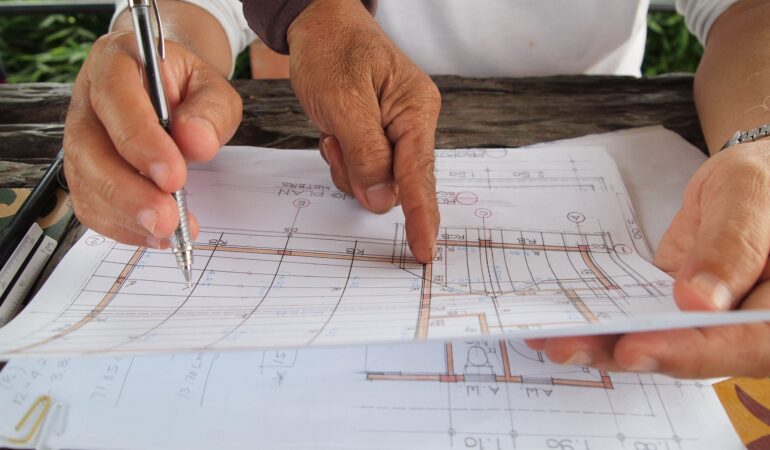
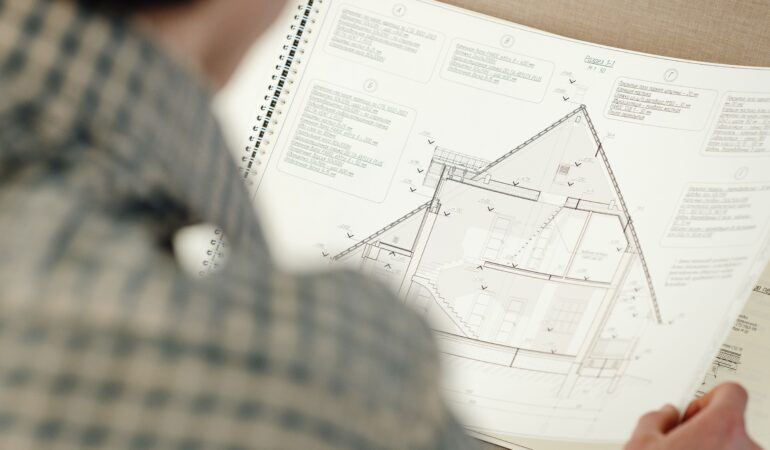
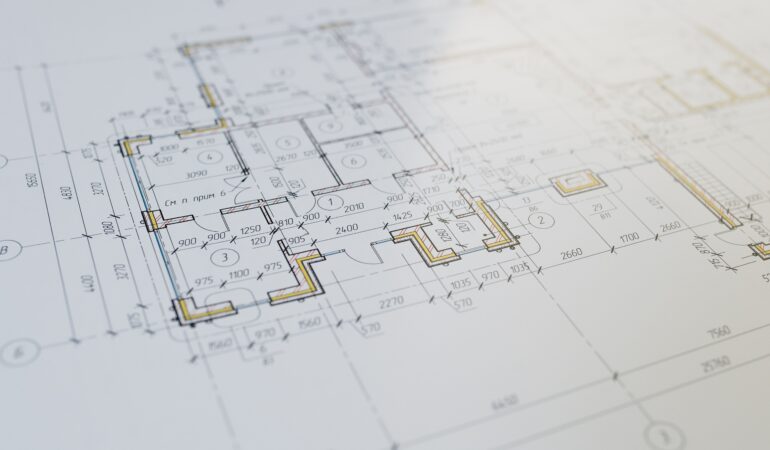
MEP drawings are the documents that make that precision possible. They are required by virtually every building department in the United States as part of the permit submission for commercial projects and for residential projects with significant mechanical, electrical, or plumbing scope. And they are, in my experience, the most commonly misunderstood component of a permit package — by homeowners, by first-time developers, and even by some general contractors who have been in the industry for years.
This post explains what MEP drawings are, what each discipline’s drawings contain, why they matter for your permit and your project, and what mistakes in MEP documentation cost developers — sometimes millions of dollars — in construction rework and delay.
What Does MEP Stand For?
MEP stands for Mechanical, Electrical, and Plumbing — the three engineering disciplines that together design and document the active building systems that make a structure habitable, functional, and code-compliant.
In practice, a fourth discipline is often added, making the acronym MEPF or MEP+F: Fire Protection. Fire sprinkler systems and fire alarm systems have their own drawing requirements, their own code compliance standards (primarily NFPA — the National Fire Protection Association codes), and their own permit review process. We will cover fire protection within the broader MEP discussion here.
Each of the three (or four) disciplines is a specialised engineering field. Mechanical engineers design heating, ventilation, and air conditioning systems. Electrical engineers design power distribution, lighting, and life safety electrical systems. Plumbing engineers design water supply, drainage, waste, and vent systems. In a well-run project, all three disciplines work simultaneously and in constant coordination with the architectural and structural teams — because the space inside a building’s walls, ceilings, and floors is finite, and every system is competing for it.
Why MEP Drawings Are Required for a Building Permit
The requirement for MEP drawings in a permit submission is not optional for most project types — it is a code mandate. Here is why each discipline requires formal documentation before a building department will issue a permit.
Mechanical (HVAC) — Health, Comfort, and Code Compliance
The mechanical system controls the thermal environment inside a building and manages the quality of the air its occupants breathe. Building codes — primarily the International Mechanical Code (IMC) and ASHRAE Standard 62.1 for commercial buildings, and the International Residential Code (IRC) for homes — mandate minimum ventilation rates, maximum duct velocities, required equipment efficiencies, and provisions for combustion air and exhaust that directly protect occupant health and safety.
An undersized HVAC system doesn’t just leave occupants uncomfortable — it can cause moisture problems leading to mould, inadequate ventilation leading to poor indoor air quality, and in the case of gas-fired equipment, inadequate combustion air leading to carbon monoxide production. These are life safety issues, and the building department’s review of mechanical drawings is the regulatory checkpoint that prevents them.
Electrical — Life Safety and Infrastructure Capacity
Electrical systems are the most heavily regulated of the three MEP disciplines, and for good reason. Electrical failures — overloaded circuits, undersized conductors, improper grounding, inadequate panel capacity — are among the leading causes of structure fires in the United States. The National Electrical Code (NEC), published by NFPA and adopted in virtually every US jurisdiction, establishes detailed requirements for every aspect of electrical system design and installation.
Building department electrical plan review verifies that the proposed system has been designed — not just planned — by someone who understands load calculations, fault current analysis, grounding system design, and the specific requirements of the building’s occupancy type. Without formal electrical drawings demonstrating this engineering, there is no basis for the building department to issue a permit.
Plumbing — Sanitation and Public Health
The plumbing system manages two of the most fundamental public health requirements of any building: the delivery of safe, potable water and the removal of waste and sewage. The Uniform Plumbing Code (UPC) or International Plumbing Code (IPC), adopted by states and localities across the country, establishes pipe sizing requirements, minimum fixture counts by occupancy, backflow prevention requirements, and the venting standards that prevent sewer gases from entering the building.
A plumbing system that has not been engineered — with pipe sizes calculated for actual flow rates, vent stacks sized for the connected fixture count, and drainage slopes verified for self-cleaning velocity — will fail in ways that range from the mildly inconvenient (slow drains) to the genuinely hazardous (sewer gas infiltration, cross-contamination of potable water).
Plumbing drawings document that these engineering requirements have been met. Without them, there is no permit.
The Anatomy of an MEP Drawing Set
Part One: Mechanical Drawings
HVAC System Layout and Duct Plans
The mechanical drawing set begins with the HVAC system design — the selection, sizing, and layout of the equipment and distribution system that will heat, cool, and ventilate the building.
A permit-quality mechanical plan includes:
- Equipment schedule — a tabular listing of every piece of HVAC equipment in the building: air handling units, fan coil units, split system condensers and air handlers, ventilation fans, exhaust fans, and any supplemental heating or cooling equipment. The schedule includes equipment designation, manufacturer and model number (or performance specification), capacity in BTU/hr or tons of cooling, airflow in CFM (cubic feet per minute), electrical characteristics, and efficiency ratings
- Duct layout plans — the routing of supply air ducts (delivering conditioned air to spaces), return air ducts (returning air to the air handling equipment), and exhaust ducts (removing air from kitchens, bathrooms, and other exhaust-required spaces). Duct sizes are calculated to deliver the correct CFM to each space at acceptable velocities — oversized ducts waste material and space; undersized ducts create noise and inadequate airflow
- Diffuser and grille schedule — the location, size, and airflow of every supply diffuser, return grille, and exhaust grille in the building, coordinated with the architectural reflected ceiling plan to ensure they are positioned correctly relative to structural elements, lighting fixtures, and sprinkler heads
- Mechanical room layouts — detailed plans of mechanical rooms showing equipment placement, clearance requirements for maintenance access, combustion air provisions for gas-fired equipment, and condensate drainage routing
HVAC Load Calculations
This is the engineering foundation of the entire mechanical design — and it is one of the most technically demanding components of the MEP package.
Heating and cooling load calculations determine the peak thermal demand of the building under the worst-case weather conditions for its geographic location. The calculation accounts for:
- Building envelope performance — the insulation R-values, window U-factors, and air infiltration rates of the architectural assembly. This is where the mechanical design directly intersects with the architectural thermal envelope — the continuous layer of insulation and air barrier that separates conditioned from unconditioned space. A poorly detailed thermal envelope translates directly into larger, more expensive mechanical equipment
- Internal heat gains — the heat generated by occupants, lighting, and plug loads inside the building
- Solar heat gain — the heat entering through windows based on their orientation, size, and Solar Heat Gain Coefficient (SHGC)
- Ventilation loads — the thermal impact of introducing outdoor air for ventilation
The load calculation result — expressed in BTU/hr for heating and tons of cooling — determines the minimum equipment capacity required. Oversizing HVAC equipment is a common and costly mistake. An oversized system short-cycles — it reaches setpoint quickly, shuts off, and repeats — which reduces efficiency, increases wear, and critically, does not run long enough to adequately dehumidify the space. In humid climates, an oversized, short-cycling system produces a building that is cool but clammy — an uncomfortable environment that no amount of thermostat adjustment will fix.
Title 24 / Energy Compliance (Mechanical)
In California and many other energy-code jurisdictions, the mechanical design must be demonstrated to comply with the applicable energy code — Title 24, Part 6 in California, or the International Energy Conservation Code (IECC) in other states. This compliance is documented in a formal energy calculation report that is submitted as part of the mechanical permit package.
The energy compliance report verifies that the selected HVAC equipment meets minimum efficiency standards, that the ventilation system meets minimum outdoor air requirements, and that the overall mechanical system performance satisfies the energy budget established by the code for the building’s climate zone and occupancy type.
Insider insight: The energy compliance calculation is not simply a checkbox. It directly constrains equipment selection, duct insulation requirements, and envelope performance — and changes late in the design process (switching from a split system to a heat pump, for example, or changing window specifications) can require the energy compliance calculation to be completely rerun. Locking in the mechanical system design before finalising the architectural drawings saves significant time and fee in the permit phase.
Part Two: Electrical Drawings
Electrical Site and Service Plan
The electrical drawing set begins with the point of connection to the utility — the service entrance — and documents how power flows from the utility meter through the building’s distribution system to every circuit and device.
The service plan shows:
- Utility connection point — the location of the utility transformer, meter, and service entrance conductors
- Service size — the total ampacity of the electrical service, calculated based on the building’s connected load (the sum of all electrical loads in the building) and the demand factor (a code-defined allowance for the statistical probability that not all loads operate simultaneously). Residential services are typically 200A single-phase; commercial services range from 400A to several thousand amps three-phase depending on building size and use
- Main distribution panel location — where the service conductors terminate in the main electrical panel, from which branch circuits and sub-panels are fed
Electrical Panel Schedules
The panel schedule is one of the most technically scrutinised documents in any electrical permit submission. It is a complete inventory of every circuit in every electrical panel in the building — the circuit number, the load description, the breaker ampacity, the connected load in watts, and the phase assignment for three-phase panels.
Panel schedules serve two critical functions: they document that the panel has sufficient capacity for all connected loads (including required spare capacity per NEC), and they provide the basis for the electrical load calculation that verifies the service size is adequate.
A common amateur error is to design the architectural layout first — placing outlets, lights, and equipment wherever they make design sense — and then attempt to reconcile the electrical demand with the available service size after the fact. A properly engineered electrical design works in the opposite direction: the load is calculated first, the service is sized accordingly, and the panel schedules are developed as an integrated part of that calculation.
Single Line Diagram
The single line diagram (also called a one-line diagram) is the document that shows the complete electrical distribution hierarchy of the building in a simplified schematic format. It does not show physical layout — it shows logical relationships: which sub-panels feed from which main panels, what the feeder conductor sizes are between them, where overcurrent protection devices are located, and how the grounding system is configured.
For a single-panel residential project, the single line diagram may be relatively simple. For a commercial building with multiple distribution panels, transformers, emergency systems, and a generator, the single line diagram becomes a complex engineering document in its own right.
The single line diagram is the electrical system’s roadmap. An electrical inspector who needs to understand how a building’s electrical system is organised goes to the single line diagram first. It must be accurate, complete, and consistent with the panel schedules and the electrical plans.
Lighting Plans
Lighting plans show the location, type, and switching arrangement of every light fixture in the building. For permit purposes, lighting plans must document:
- Fixture type and location — every fixture identified by a mark number keyed to a luminaire schedule that includes fixture type, lamp type, wattage, mounting method, and for recessed fixtures, the fire rating and insulation contact (IC) rating of the housing
- Switching and circuiting — which fixtures are controlled by which switches, including three-way and four-way switching arrangements, dimmer locations, and occupancy sensor locations where required by energy code
- Emergency and exit lighting — the locations of all exit signs, emergency egress lighting fixtures, and the circuit arrangements that keep them energised during a power failure
- Energy compliance — in energy-code jurisdictions, lighting plans must demonstrate compliance with maximum lighting power density (LPD) requirements, expressed in watts per square foot, for each space in the building. This is the lighting component of the Title 24 or IECC energy compliance report
Power Plans
Power plans show the layout of all electrical receptacles, equipment connections, and dedicated circuits in the building. Key elements include:
- Receptacle locations — standard duplex receptacles, GFCI-protected receptacles in wet locations (kitchens, bathrooms, exterior, garage, and within 6 feet of a sink per NEC), AFCI-protected circuits in living areas and bedrooms
- Dedicated equipment circuits — circuits serving specific equipment loads: kitchen appliances, HVAC equipment, electric vehicle charging stations, large commercial equipment
- Circuit home runs — the notation indicating which panel and circuit number serves each outlet or equipment connection, allowing direct correlation to the panel schedule
- Special systems — data and communications outlets, security system devices, audio-visual infrastructure, and other low-voltage systems that must be coordinated with the power layout
Insider insight: EV charging infrastructure is increasingly required by code in new residential and commercial construction — California’s Title 24 has required it in new residential construction since 2023, and other states are following. If your project is in a jurisdiction with EV readiness requirements, the electrical drawings must include EV-capable circuits or conduit stub-outs to required locations. Missing this requirement in the permit drawings and discovering it during plan check adds delay; missing it entirely and discovering it during construction inspection is significantly more expensive.
Part Three: Plumbing Drawings
Water Supply Plans
The water supply plan documents the complete potable water distribution system from the point of connection to the municipal water main (or private well) through the building to every fixture and equipment connection.
A permit-quality water supply plan shows:
- Service line — the pipe size and material of the water service from the street or well to the building, including the meter location and any required backflow prevention device
- Distribution layout — the routing of the cold water main and hot water distribution lines through the building to every fixture group
- Pipe sizes — calculated based on fixture unit values assigned to each plumbing fixture by the plumbing code, with pipe sizes selected to maintain adequate pressure and flow velocity at the most remote and most demanding fixture location under simultaneous use conditions
- Water heater specification — capacity, recovery rate, and energy efficiency of the domestic hot water system, including any recirculation loop required for buildings where the distance from the water heater to the farthest fixture exceeds code-specified limits
- Hot water recirculation — in commercial buildings and larger residential projects, a hot water recirculation system prevents the frustrating and wasteful practice of running water until it reaches temperature. The design of this system — pump sizing, loop routing, control strategy — must be documented in the plumbing drawings
Drainage, Waste, and Vent Plans (DWV)
The drainage, waste, and vent system is the most complex portion of the plumbing design — and the most consequential when it fails. This system removes wastewater from fixtures, conveys it to the sanitary sewer, and maintains the atmospheric pressure in the drainage pipes that prevents sewer gas from being siphoned through fixture traps and entering the building.
Permit-quality DWV plans show:
- Drain line layout — the routing of drain lines from every fixture to the building drain and ultimately to the municipal sewer connection or septic system, with pipe sizes and slopes indicated. Drain lines must maintain a minimum slope — typically 1/4 inch per foot for lines up to 3 inches in diameter — to ensure self-cleaning velocity: the flow velocity required to carry solids through the pipe without deposition
- Vent system — every drain line must be vented to atmosphere to prevent the siphoning of trap seals. The vent system — individual vents, wet vents, common vents, and the main stack vent — must be designed and routed so that every fixture trap is protected. A drain that loses its trap seal allows sewer gas — including hydrogen sulfide and methane — direct access to the building interior
- Cleanout locations — access points for drain line maintenance and obstruction clearing, required at specific intervals and locations by the plumbing code
Plumbing Riser Diagrams
The riser diagram is to the plumbing system what the single line diagram is to the electrical system — a schematic representation that shows the complete system in elevation, floor by floor, from the building drain at the bottom to the vent stacks at the top.
Riser diagrams show pipe sizes at every point in the system, the fixture unit count tributary to each section of pipe, the location of cleanouts and vents, and the relationship between floors and the drainage and vent system connecting them. For multi-storey buildings, the riser diagram is essential — it allows the plan reviewer and the plumbing inspector to verify that the system has been properly engineered throughout its vertical extent, not just on any single floor plan.
Insider insight: One of the most common and most expensive plumbing coordination failures occurs when drain lines that must slope downward to drain by gravity conflict with structural elements — beams, joists, and foundations — that occupy the same space. A drain line cannot go through a beam (or when it must, a structural engineer must evaluate the penetration and the contractor must provide a sleeve and header). In multi-storey construction, drain lines from upper-floor bathrooms must clear the ceiling of the floor below — which means ceiling heights, structural depths, and plumbing drain slopes must all be coordinated before framing begins. This coordination happens in the drawings. It cannot happen in the field without significant cost.
Part Four: Fire Protection Drawings
Fire Sprinkler Plans
Fire sprinkler systems are required in virtually all new commercial construction and, increasingly, in new residential construction — particularly in California, which has mandated residential fire sprinklers in new one- and two-family dwellings since 2011.
Fire sprinkler permit drawings, prepared in accordance with NFPA 13 (commercial), NFPA 13R (residential occupancies up to four stories), or NFPA 13D (one- and two-family dwellings), must show:
- Sprinkler head layout — the location of every sprinkler head, with the coverage area of each head verified to comply with the maximum spacing and maximum coverage area requirements of the applicable NFPA standard
- Pipe sizing — calculated using the hydraulic calculation method or the pipe schedule method, depending on system design and authority having jurisdiction (AHJ) requirements
- Water supply analysis — verification that the available water supply (flow rate and residual pressure at the point of connection) is adequate to support the design demand of the sprinkler system under fire conditions
Fire Alarm and Life Safety Plans
Fire alarm systems are required in virtually all commercial occupancies and in residential buildings above a certain size threshold. Fire alarm permit drawings, prepared in accordance with NFPA 72 (National Fire Alarm and Signaling Code), must show:
- Device layout — the location of every smoke detector, heat detector, manual pull station, notification appliance (horn/strobe), and control panel in the building
- System topology — whether the system uses conventional or addressable technology, the zone assignments, and the wiring scheme
- Sequence of operations — the logical description of how the system responds to alarm conditions, including integration with HVAC shutdown, door holder release, elevator recall, and fire suppression system monitoring
MEP Coordination: The Most Important and Most Overlooked Part
Every MEP engineer I respect would say the same thing: the drawings are necessary, but the coordination is what makes a project succeed.
MEP coordination is the process by which the mechanical, electrical, and plumbing systems — and their interaction with the structural system and the architectural design — are reviewed, reconciled, and confirmed to be physically buildable in the space available. It is the discipline of ensuring that when a contractor arrives on site, they are not discovering for the first time that the HVAC duct conflicts with the structural beam, that the sprinkler main interferes with the electrical conduit, or that the plumbing stack is routed through the shear wall.
In high-budget commercial projects, MEP coordination is performed using BIM (Building Information Modelling) software — Revit, Navisworks — which allows all disciplines to be modelled in three dimensions simultaneously, with automated clash detection identifying conflicts before they reach the construction site.
In residential and smaller commercial projects, coordination is performed through manual cross-referencing of the drawings — a discipline that requires care, experience, and a genuine commitment to catching problems on paper rather than in the field.
At Noblyn LLC, MEP drawings are produced in-house, alongside and in continuous coordination with the architectural and structural drawings. We do not produce MEP drawings in isolation and hope that the coordination happens elsewhere. We own the coordination process — and that ownership is what produces a permit package that passes plan check and a construction set that builds without conflict.
The Most Costly MEP Mistakes in Construction
1. Designing MEP Systems After the Architectural Layout Is Locked
This is the equivalent of planning a road network after all the buildings have already been constructed. MEP systems need space — ceiling space for ductwork, wall cavities for plumbing and conduit, mechanical rooms for equipment, electrical rooms for panels and switchgear. When MEP engineering is engaged after the architectural design is fixed, the engineer is forced to route systems through whatever space remains — and what remains is rarely optimal.
The result is inefficient duct runs that increase static pressure and fan energy; plumbing routes that violate minimum slope requirements; electrical panel locations that conflict with code-required working clearances. All of these problems can be resolved, but resolving them late costs more than preventing them early.
2. Undersizing the Electrical Service
An undersized electrical service is one of the most expensive corrections in construction — because correcting it requires coordination with the utility company (which operates on its own schedule), replacement of the service entrance equipment, and potentially replacement of the conductors from the utility transformer to the building. The timeline for a utility-coordinated service upgrade can extend a project by months.
Service sizing errors occur when load calculations are performed on an incomplete or preliminary electrical design — before all equipment has been specified and all circuits accounted for. The correction is to perform a thorough, complete load calculation on a finalised electrical design before the permit drawings are issued. At Noblyn, we do not finalise electrical drawings until the load calculation has been verified to support the proposed service size with adequate spare capacity.
3. Ignoring Mechanical Room Space Requirements
Mechanical equipment requires space — not just the footprint of the equipment itself, but the clearances required for code-compliant installation and for maintenance access. A gas-fired furnace requires a specific minimum volume of combustion air. An air handling unit requires clearance on the service side for filter removal and coil access. A commercial chiller requires clearance on all sides for condenser airflow and tube removal.
When mechanical room layouts are not designed as part of the MEP drawings — when the mechanical room is simply a residual space left over after the architectural layout is determined — the equipment frequently cannot be installed to code, cannot be maintained without extraordinary effort, and sometimes cannot physically fit. Redesigning mechanical rooms in the field is expensive, disruptive, and occasionally impossible without structural modifications.
What a Complete MEP Permit Package Looks Like
A complete MEP permit drawing set for a typical commercial project includes:
Mechanical
- Mechanical cover sheet and general notes
- HVAC equipment schedule
- Floor-by-floor mechanical plans with duct layouts and diffuser locations
- Mechanical room layouts
- HVAC load calculations
- Energy compliance documentation (Title 24 or IECC)
Electrical
- Electrical cover sheet and general notes
- Electrical site plan showing service entrance
- Single line diagram
- Panel schedules for all panels
- Floor-by-floor lighting plans with fixture schedule
- Floor-by-floor power plans
- Load calculations
- Energy compliance documentation (lighting power density)
Plumbing
- Plumbing cover sheet and general notes
- Floor-by-floor water supply plans
- Floor-by-floor drainage, waste, and vent plans
- Plumbing riser diagrams (water supply and DWV)
- Fixture schedule
Fire Protection
- Fire sprinkler plans with hydraulic calculations
- Fire alarm plans with device schedule and sequence of operations
For residential projects, the package is appropriately scaled — a new single-family residence may require mechanical plans and load calculations, an electrical plan with panel schedule and single line diagram, and plumbing plans with riser diagrams. The principles are identical; the complexity reflects the project scale.
The Noblyn LLC Approach to MEP Drawings
At Noblyn LLC, MEP drawings are not a separate service bolted onto an architectural package. They are an integrated component of every complete permit drawing set we produce.
Our MEP engineers work alongside our architectural and structural teams from the earliest stages of design — coordinating duct zones with ceiling heights, routing plumbing stacks through structurally appropriate locations, sizing electrical services before the architectural layout is finalised. Every MEP package we deliver is reviewed for internal coordination and cross-checked against the architectural and structural drawings before it leaves our office.
We produce MEP permit packages that pass plan check — because they are engineered correctly, documented completely, and coordinated thoroughly. And we provide full revision support through every round of building department review, at no additional charge, until your permit is in hand.

Fayaz
Frequently Asked Question - FAQs
It depends on the project scope and local jurisdiction. For new residential construction, most building departments require at minimum a mechanical plan showing HVAC equipment and duct layout, an electrical plan with panel schedule and single line diagram, and a plumbing plan with riser diagrams. For smaller residential projects — room additions, kitchen remodels, bathroom additions — the required MEP documentation is typically scaled to the scope of work: a bathroom addition requires a plumbing plan; an electrical panel upgrade requires an electrical plan and load calculation; a new HVAC system requires a mechanical plan and load calculation. Commercial projects of virtually any size require a full MEP permit package. Always verify specific requirements with your local building department or consult an experienced permit drawing firm before preparing your submission.
Mechanical drawings document the heating, ventilation, and air conditioning (HVAC) systems — the equipment, duct routing, equipment schedules, and load calculations that ensure the building's thermal environment and air quality meet code requirements. Electrical drawings document the power distribution system — service entrance, panels, circuits, lighting, and receptacle layout — along with load calculations verifying the service is adequately sized. Plumbing drawings document the water supply and drainage systems — pipe routing, fixture connections, riser diagrams, and the vent system that protects fixture trap seals. While each discipline has its own engineer and its own drawing set, all three must be coordinated with each other and with the architectural and structural drawings to produce a buildable, permit-compliant building.
MEP coordination is the process of reviewing and reconciling the mechanical, electrical, and plumbing systems — and their interaction with the structural and architectural design — to confirm that all systems can be physically installed in the available space without conflict. In construction, the most expensive problems are not design errors — they are coordination failures: a duct that runs through a structural beam, a plumbing stack routed through a shear wall, a sprinkler main that conflicts with an electrical conduit. These conflicts are cheap to resolve on paper during the drawing phase and extremely expensive to resolve in the field during construction. Proper MEP coordination — whether performed manually through careful cross-referencing or through BIM software in larger projects — is what prevents field conflicts and the delays and cost overruns that accompany them.
For a standard residential project — new construction or a major renovation — a complete MEP drawing package typically takes 7 to 14 business days from receipt of the architectural drawings and all required project information. Commercial MEP packages for tenant improvements typically take 10 to 20 business days; new commercial construction may require 4 to 8 weeks for a fully coordinated MEP package. Timeline is directly affected by the completeness of the architectural drawings provided and the speed at which equipment specifications and building program information are confirmed. At Noblyn LLC, we confirm MEP drawing timelines upfront after reviewing the full project scope and available information.
MEP drawings can technically be produced by separate firms from the architectural drawings, but they must be coordinated to be effective. MEP systems are physically located inside the space defined by the architectural design — in walls, above ceilings, in mechanical rooms, below slabs. If the MEP engineer does not have access to current, accurate architectural drawings during the MEP design process, the resulting MEP drawings will be based on assumptions about space availability that may be incorrect. The consequences — duct routes that conflict with beams, plumbing stacks that land inside shear walls, mechanical rooms that are too small for the required equipment — are discovered in the field, where they are expensive and disruptive to correct. At Noblyn LLC, MEP and architectural drawings are produced by the same team, in continuous coordination, to eliminate these conflicts before they reach the construction site.