
You’ve narrowed your design down. The floor plans are approved, the massing studies are signed off, and now someone on your team a partner, an investor, a marketing lead has asked the question that stalls half the pre-construction visualization budgets I see:
“Do we really need a walkthrough animation, or will renderings do the job?”
It’s a fair question, and it’s the wrong one to answer with a gut feeling. After more than a decade sitting across the table from luxury homeowners, commercial developers, and real estate investors during design development, I’ve watched this decision go wrong in both directions firms that spend six figures animating a building nobody outside the boardroom will ever see, and firms that try to sell a $40M mixed-use tower with three flat images and wonder why the capital isn’t moving.
The honest answer is that walkthrough animation and static rendering aren’t competing products. They’re different tools solving different problems, and the “worth it” calculation depends entirely on what you’re actually trying to accomplish design validation, investor capital, retail pre-leasing, or a private client’s peace of mind before groundbreaking. Let’s break down exactly how to make that call correctly.
What Static Rendering Actually Does Well
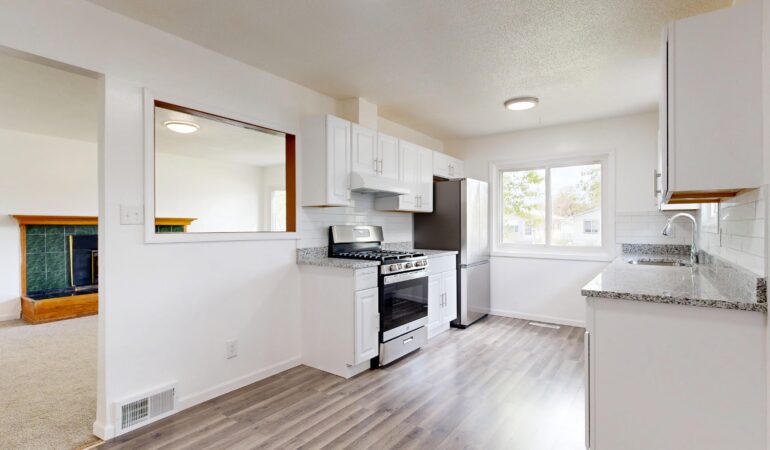
A static rendering, sometimes called a photorealistic still or an architectural visualization (archviz) still, is a single, high-resolution frame produced by ray-tracing a 3D model with physically accurate lighting, materials, and atmosphere. Think of it as a photograph of a building that doesn’t exist yet.
The Core Strengths
Resolution and detail density. Because all of the rendering engine’s computational budget goes into one frame instead of thousands, static renders can be pushed to extreme resolution ideal for large-format print, lobby displays, or zoning board presentation boards where a viewer might stand two feet from a 4-foot-wide print and scrutinize stone coursing or window mullions.
Speed and cost efficiency. A single hero rendering can typically be turned around in days, not weeks, because you’re not managing camera paths, motion blur, or frame-to-frame consistency. For a client needing a marketing image before a listing goes live, this matters.
Precision for critical decision-making. When a client is choosing between two facade materials or two landscape schemes, a still image isolates the variable. Motion introduces atmosphere and emotion, which is powerful, but it can also distract from the specific detail you need someone to evaluate and sign off on.
Where Static Falls Short
A still image cannot communicate sequence. It cannot show a buyer what it feels like to walk from a compressed entry into a double-height living space, or how a commercial lobby unfolds as a visitor moves from the street into the elevator core. Spatial experience, arguably the single most important thing architecture actually delivers, is the one thing a static image structurally cannot represent.
What Walkthrough Animation Actually Does Well
A walkthrough animation is a rendered sequence, typically 30 to 120 seconds, that moves a virtual camera through the building interior and exterior, simulating the experience of physically touring the space before it’s built.
The Core Strengths
Spatial storytelling. This is the entire value proposition. Animation lets you control pacing, reveal, and emotional arc the same way a film director does, building anticipation before a reveal, lingering in a signature space, and compressing less important circulation. For luxury residential clients, this is often what closes an emotional decision that a floor plan alone never could.
Investor and capital-raise communication. In my experience, this is where animation earns back its cost fastest. Institutional investors and lenders are evaluating dozens of pro formas a month. A well-produced flythrough signals design maturity and de-risks the project in their mind it demonstrates the team has thought through circulation, program adjacency, and buildability, not just aesthetics.
Pre-leasing and pre-sale marketing. For commercial developers and multifamily sponsors, an animation embedded on a landing page or used in a VR headset at a sales gallery consistently outperforms static galleries for engagement time and lead conversion because it does the imaginative work for the prospect instead of asking them to do it themselves.
Where Animation Falls Short
Animation is unforgiving of an unfinished design. Because the camera moves continuously, every surface, every sightline, and every piece of furniture placement is exposed; there’s no cropping around a weak detail the way you can with a carefully composed still. It also costs significantly more (often 3–6x a comparable still) and takes considerably longer to produce and revise, since a single client note about camera pacing can mean re-rendering the entire sequence.
The Insider Framework: How We Actually Decide
Here’s the decision logic I walk clients through, and it’s rarely about budget alone it’s about audience and decision stage.
1. Ask who is actually going to view this asset
- Internal design team / permitting bodies → Static rendering, often paired with technical elevations. You need precision, not emotion.
- A single high-net-worth buyer or homeowner → Animation, especially for signature spaces (great room, primary suite, pool terrace). The emotional close matters more than cost efficiency here.
- Institutional capital/lenders → A short, restrained animation (60–90 seconds) that prioritizes clarity of program and circulation over cinematic flourish.
- A broad retail or public audience (pre-leasing, community engagement) → A hybrid package: hero stills for print/press, animation for the website and sales center.
2. Ask what decision-stage the project is in
Early schematic design rarely justifies animation the design is still moving, and you’ll be re-rendering constantly. We generally recommend holding animation until design development is at least 90% locked. Static renderings, by contrast, are cheap enough to iterate on during schematic design and are the better tool for testing material and massing options with a client.
3. Common Mistake I See Firms Make
The single most expensive mistake I see clients make is commissioning a full walkthrough animation before the design is settled, treating it as a design tool rather than a communication tool. Animation isn’t a persuasion instrument, and persuading someone of a design that’s still going to change is money spent twice. Lock the design with stills first. Animate to sell or finance it second.
A second common mistake, particularly among commercial developers, is under-scoping the animation’s audio and pacing. A visually excellent flythrough with generic stock music or a pace that lingers too long in secondary spaces (parking, back-of-house circulation) will lose an investor’s attention in the first 20 seconds, and in a pitch deck context, that’s often all the time you get.
A Hybrid Approach Is Usually the Right Answer
In practice, the highest-performing visualization packages we produce almost never choose one over the other. A typical luxury residential or mixed-use commercial package includes:
- 4–8 hero static renderings for print, press, and detailed material review
- One restrained 60–90 second walkthrough for digital marketing, investor decks, and sales galleries
- Select still frames pulled directly from the animation sequence for social and web use, maximizing the return on the animation spend
This layered approach lets each medium do what it does best, without asking a single asset type to carry the entire communication burden of the project.
Final Take
If you’re validating design decisions, presenting to a planning board, or need something in hand fast, static rendering is the right first move, and often the only tool you need. If you’re closing capital, marketing a signature residence, or pre-leasing a commercial asset where the experience of the space is the product you’re selling a walkthrough animation isn’t a luxury add-on; it’s the tool doing the actual selling.
The worst outcome isn’t picking the “wrong” one. It’s picking either one before you’ve clarified who’s watching and what you need them to decide.

Taswar Hussain
Frequently Asked Question - FAQs
Static renderings typically run per-image, while animation is priced per second of finished footage. As a rough industry benchmark, a polished 60–90 second walkthrough often costs 3–6 times what a comparable set of hero stills would run, largely due to the additional time required for camera choreography, motion consistency, and revision rounds.
Depending on complexity, scene count, and revision rounds, a professional walkthrough typically takes several weeks from locked design to final delivery, considerably longer than static renderings, which can often be turned around in days.
Yes, and in most well-funded projects this is the recommended approach: using stills for print, press, and detailed review, and a shorter animation for digital marketing, investor presentations, or sales galleries.
Generally, yes. Because animation exposes every surface and sightline continuously, it's best commissioned once the design is substantially locked, typically at or beyond 90% design development to avoid costly re-renders as decisions shift.
For capital raises, a restrained, well-paced walkthrough animation tends to outperform static images because it demonstrates design maturity and lets investors visualize circulation and program adjacency in a way a still image cannot, though it should always be paired with clear technical stills for reference.