
You’ve decided to build an Accessory Dwelling Unit. The design is in your head, the contractor is on speed dial, and the budget is approved. Then someone mentions permit drawings — and suddenly the timeline you envisioned starts to feel uncertain.
This is one of the most common inflection points where ADU projects stall, overspend, or get built incorrectly. Not because the idea was wrong, but because the documentation behind it wasn’t treated with the same seriousness as the design itself.
As architects who have guided hundreds of ADU projects through municipal approval processes, we can tell you with confidence: your permit drawings are not a bureaucratic formality. They are the technical blueprint of your entire project’s legal and structural legitimacy. Get them right, and everything downstream — permitting, construction, financing, resale — moves with far greater ease.
This guide gives you the comprehensive, expert-level understanding you need before a single shovel breaks ground.
Our team provides end-to-end architectural, structural, and MEP coordination to ensure your plans are compliant and ready for approval. Don’t let documentation delays hold you back.
Ready to turn your vision into a permit-ready project?
What Are ADU Permit Drawings?
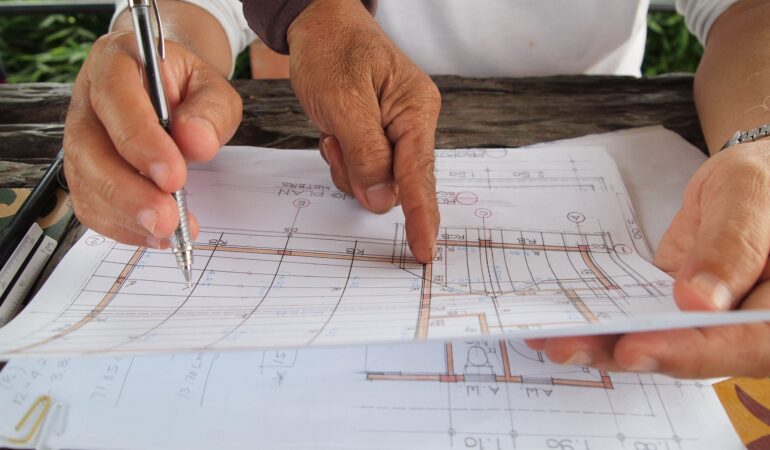
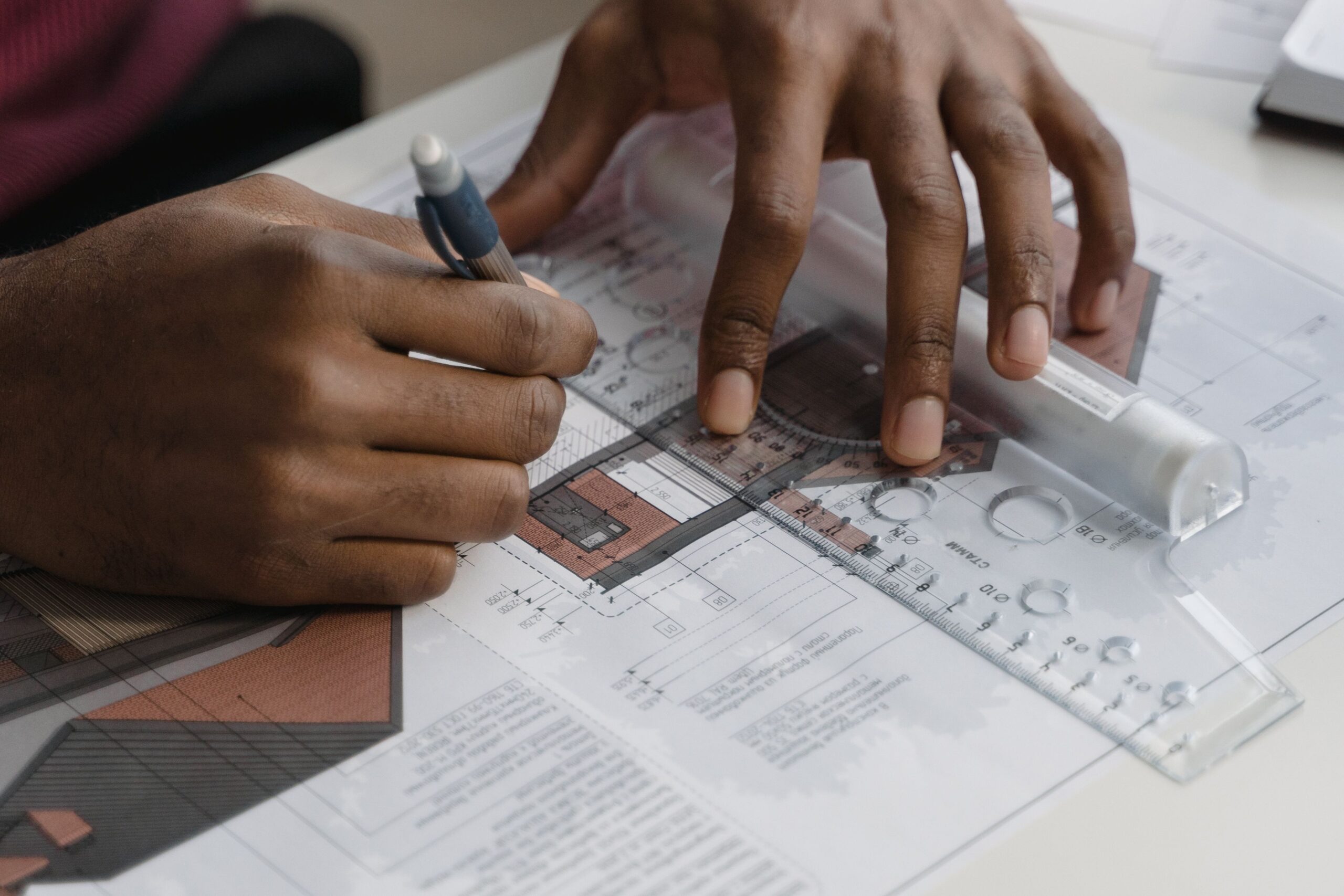
ADU permit drawings — formally referred to as construction documents or CD sets — are a complete package of architectural, structural, and engineering plans submitted to your local building and planning department for review and approval.
They are legally binding documents. Once stamped and approved, they become the authoritative record of what is permitted to be built, where, and how. Deviation from approved drawings during construction is not a minor issue — it can trigger stop-work orders, mandatory demolition of non-compliant work, or denial of a Certificate of Occupancy.
A complete permit drawing set typically includes the following sheets:
Site Plan
This shows the ADU’s position on the property relative to existing structures, property lines, easements, and public rights-of-way. Setback compliance — the minimum required distance between your structure and property boundaries — is verified here. Many municipalities are particularly strict about rear and side setback requirements for ADUs, which differ from those governing the primary residence.
Floor Plans
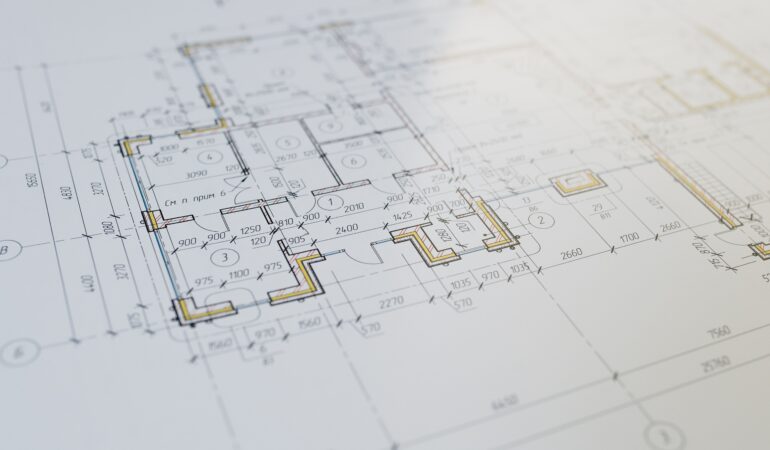
Dimensioned drawings of each level of the ADU showing room layouts, wall locations, door and window placements, and square footage calculations. These establish compliance with minimum room size requirements, egress standards, and occupancy classifications.
Elevations
Exterior elevation drawings show all four faces of the structure. They communicate building height, fenestration (window and door) placement, exterior materials, and compliance with any design review or neighborhood compatibility standards your jurisdiction may impose.
Sections and Details
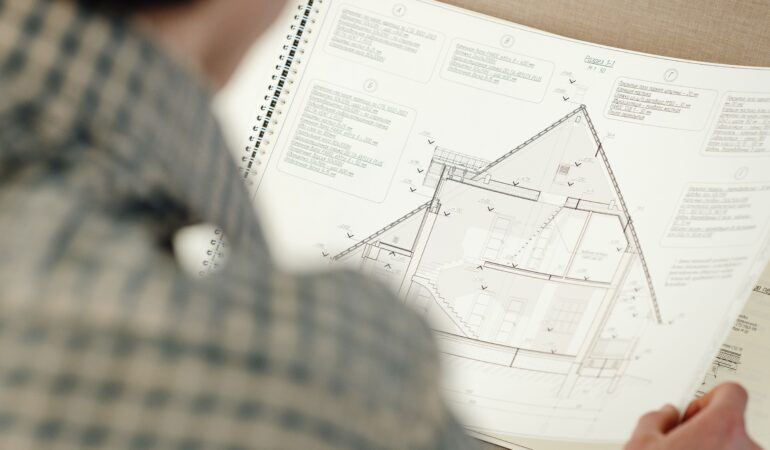
Cross-sectional drawings cut through the building to illustrate wall assemblies, ceiling heights, floor-to-floor dimensions, insulation strategies, and waterproofing conditions — particularly critical at foundations, roofs, and wet areas like bathrooms and kitchens.
Structural Drawings
Engineered drawings — typically prepared or reviewed by a licensed structural engineer — showing the foundation system, framing, load paths, and lateral force resistance system (critical in seismic zones). These are non-negotiable in most jurisdictions.
MEP Drawings
Mechanical, Electrical, and Plumbing drawings document HVAC systems, electrical panel sizing and circuit layouts, plumbing supply and drainage routing, and fixture locations. Title 24 energy compliance documentation (in California) or its equivalent in other states is also submitted here.
Why ADU Permit Drawings Are More Complex Than They Appear
Homeowners frequently underestimate the complexity of ADU permitting documentation, assuming it resembles a simple home improvement permit. In practice, an ADU is classified as a new dwelling unit — and that distinction carries significant regulatory weight.
Dual Compliance: Zoning and Building Code
Your drawings must satisfy two separate regulatory frameworks simultaneously. Zoning regulations — governed by your municipality’s planning department — control what can be built where: unit size limits, height maximums, setbacks, lot coverage, and sometimes design aesthetics. Building codes — enforced by the building department — govern how it must be built: structural integrity, fire safety, egress, ventilation, and accessibility.
These two frameworks are administered by different departments, reviewed on different timelines, and sometimes have conflicting requirements that must be reconciled by your design team.
Existing Conditions Documentation
For attached ADUs or garage conversions, your permit drawings must accurately reflect the existing structure — including elements that may have been built decades ago, without permits, or with materials no longer code-compliant. This often requires a detailed existing conditions survey and, in some cases, destructive investigation (opening walls) to verify what’s actually there before a responsible architect can document it.
Utility and Infrastructure Coordination
A new dwelling unit requires its own utility service considerations. Depending on your jurisdiction and the type of ADU, this may include a separate electrical meter, independent water and sewer laterals or demonstrated capacity on shared services, and fire sprinkler systems (required in many California jurisdictions for new ADUs over a certain size). Each of these has documentation requirements that must appear in your drawing set.
The Most Common Mistakes Homeowners Make with ADU Permit Drawings
After reviewing dozens of projects that arrived at our firm after failed permit submissions elsewhere, the same categories of error appear repeatedly.
Mistake 1: Using Generic or Out-of-Date Templates
Some design-build contractors and online services offer templated ADU plans. While these may be attractive for their lower upfront cost, template drawings are not site-specific. They do not account for your lot’s unique topography, existing utility locations, specific setback conditions, or the particular requirements of your jurisdiction’s current code cycle. A drawing set that was approved in one city, or even one neighborhood, is not automatically approvable elsewhere.
Mistake 2: Underestimating Structural Engineering Requirements
Many homeowners treat structural drawings as a box-checking exercise rather than a substantive engineering task. In seismic zones, high-wind regions, or on hillside lots, the structural engineering of even a modest ADU can be sophisticated work. Cutting corners here — or hiring a drafter without proper engineering oversight — results in either plan check rejections or, far worse, structures that perform poorly under load.
Mistake 3: Failing to Verify Entitlement Eligibility Before Design
Design work should not begin before a thorough zoning and entitlement analysis. We regularly see clients who have invested significantly in design only to discover their property has a recorded easement, a deed restriction, or a specific zoning overlay that significantly limits — or in rare cases, prohibits — ADU development. A pre-design feasibility review prevents this entirely.
Mistake 4: Treating the Permit Process as Linear
Many clients expect a straight line from submission to approval. The reality is that most jurisdictions engage in a plan check process that results in a correction letter — a list of items requiring revision or additional documentation before approval is granted. Experienced architects anticipate the most likely correction categories for a given jurisdiction and address them proactively in the initial submission, significantly reducing review cycles.
Mistake 5: Ignoring Title 24 / Energy Compliance Early
Energy compliance documentation — California’s Title 24 being the most rigorous example — is a technical calculation that must be integrated into the building design. When it’s treated as an afterthought, the compliance modeling may require design changes (to window-to-wall ratios, insulation values, or mechanical systems) that cascade back through the drawing set, creating rework and delays.
Insider Tips: What Separates a Smooth Permitting Experience from a Difficult One
Pre-Application Meetings Are Underutilized. Most planning and building departments offer pre-application conferences where you can present a preliminary design concept and receive early feedback from plan check staff. This single step — which adds perhaps two to three weeks to your pre-design timeline — can prevent months of back-and-forth during formal review. We recommend this for any project with complexity: hillside sites, historic districts, larger unit sizes, or jurisdictions with active design review programs.
Know Your Jurisdiction’s ADU Ordinance, Not Just State Law. In California, for example, state ADU law has significantly expanded homeowner rights and limited what municipalities can restrict. However, local ordinances still govern design standards, owner-occupancy requirements (where permitted), and processing timelines. The interaction between state preemption and local discretion is nuanced and changes as case law evolves. Your design team should be current on both.
Document Everything During Construction. Approved permit drawings are the baseline. During construction, field conditions will occasionally require minor deviations — a relocated beam, a shifted drain, an adjusted window height. These should be tracked meticulously as as-built modifications and reflected in a final record drawing set. This documentation becomes critical if you ever refinance, sell the property, or need to pull future permits.
Separate Permits Are Often Required. Your architectural permit drawings initiate the building permit, but separate permits — for electrical, plumbing, mechanical, and grading — are typically required and pulled by licensed subcontractors. Your general contractor should manage this process, but your architect should be coordinating to ensure all permit documents are consistent and that subcontractor scopes align with the approved drawings.
How Long Does the ADU Permit Drawing and Approval Process Take?
Timelines vary considerably by jurisdiction, project complexity, and current department workloads. As a general framework:
Schematic Design and Pre-Application: 3–6 weeks Construction Document Preparation: 6–12 weeks depending on complexity Initial Plan Check Review: 4–12 weeks (jurisdictions with over-the-counter review can be faster for simple projects; some agencies are processing in 4–6 weeks for ministerially approved ADUs under SB 9 and related legislation) Correction Response and Re-Review: 2–6 weeks per cycle, with 1–2 correction cycles being typical
A realistic expectation for a straightforward detached ADU in a cooperative jurisdiction is 4–6 months from design commencement to permit issuance. Complex projects, hillside conditions, design review processes, or backlogged departments can extend this to 9–12 months.
What to Look for When Hiring an Architect for ADU Permit Drawings
Not all architects have equal experience with ADU entitlement and documentation. When evaluating firms, consider asking:
- How many ADUs have you permitted in this specific jurisdiction?
- Do you have established relationships with the local plan check department?
- Will a licensed architect of record — not a drafter or project coordinator — be responsible for and signing the drawings?
- What is your process for managing plan check corrections?
- Do you provide as-built documentation at the end of construction?
The quality of your permit drawings directly correlates with the quality of your built outcome. This is not the place to optimize for the lowest fee.
Our team provides end-to-end architectural, structural, and MEP coordination to ensure your plans are compliant and ready for approval. Don’t let documentation delays hold you back.
Ready to turn your vision into a permit-ready project?
Frequently Asked Question - FAQs
In most jurisdictions, permit drawings for a new dwelling unit must be prepared and wet-stamped by a licensed architect or engineer. While some states allow contractors or experienced designers to prepare drawings for simpler structures, a new ADU — as a habitable residential unit — almost universally requires licensed professional authorship. Beyond the legal requirement, the liability protection and professional accountability that come with a licensed architect's stamp are significant.
The terms are often used interchangeably, but there is a meaningful distinction. Permit drawings are the set submitted to the municipality for regulatory review and approval — they demonstrate code compliance. Construction drawings (sometimes called working drawings or bid documents) are the full set used to build the project, which may include additional detail, specification documents, and coordination drawings not required for the permit submission itself. Many firms combine these into a single comprehensive set; others issue them in stages.
If you are building more than one ADU (as is now permitted in many California jurisdictions under state law), each unit must be documented and permitted individually, even if they share a similar design. That said, a prototype or "repeated unit" approach can meaningfully reduce design fees for the second unit — a qualified architecture firm can adapt the first unit's drawings rather than starting from scratch.
Unauthorized deviations from approved drawings are a serious issue. If discovered during inspection, they typically trigger a correction notice requiring the non-compliant work to be brought into conformance — which may mean opening completed assemblies. If discovered after occupancy (during a sale, refinance, or future permit application), unpermitted work can reduce property value, complicate or block financing, and require costly retroactive permitting or removal. The right approach is always to pull a revision permit for any meaningful change during construction.
Architectural fees for ADU permit drawings vary based on unit size, complexity, site conditions, and regional market rates. For a straightforward detached ADU in a cooperative jurisdiction, architectural fees typically range from $8,000 to $20,000. Attached ADUs, garage conversions with significant structural work, hillside projects, or jurisdictions requiring design review will trend toward the higher end or beyond. Structural engineering, energy compliance modeling, and civil engineering (grading and drainage) are often separate line items. Fees should be evaluated in the context of the total project budget and the cost of delays or corrections that result from under-resourced documentation.