

The honest answer most architects won’t give you upfront — and the timeline framework that actually lets you plan.
Every week, I speak with clients who arrive at their first consultation with a construction start date already in mind. Sometimes it is tied to a contractor’s availability window. Sometimes it is a personal milestone — a family relocation, a lease expiry, a seasonal deadline. Almost always, it is earlier than the reality of professional documentation will allow.
The question of how long architectural permit drawings take is one of the most consequential questions in any development or renovation project, and it is one of the most consistently misunderstood. The internet offers confident answers — “four to six weeks” appears frequently — that are, at best, accurate for a narrow subset of simple projects and, at worst, a source of expensive scheduling miscalculations for everyone else.
This post gives you the complete picture: what actually goes into permit drawing production, what drives timeline variability, and how to structure your project schedule so that documentation works for you rather than against you.
Our team provides end-to-end architectural, structural, and MEP coordination to ensure your plans are compliant and ready for approval. Don’t let documentation delays hold you back.
Ready to turn your vision into a permit-ready project?
What “Permit Drawings” Actually Encompasses
Before discussing timelines, it is worth being precise about what permit drawings are — because the term is often used loosely in ways that create confusion.
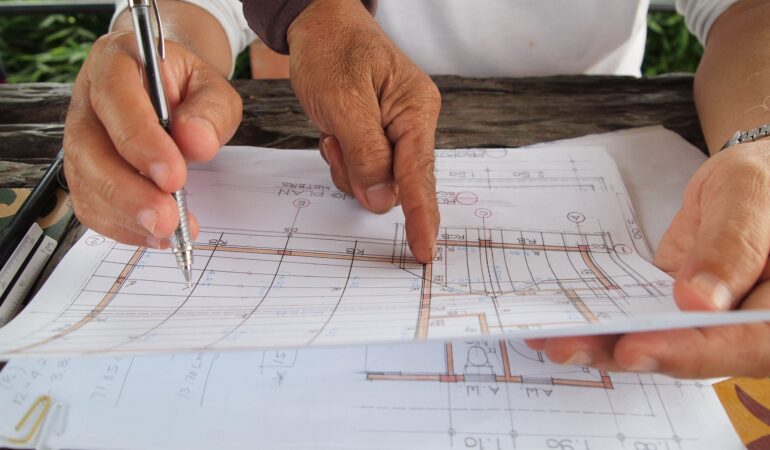
Permit drawings, formally referred to as Construction Documents (CDs) or, in some contexts, a Permit Set, are the full body of technical drawings and specifications submitted to a building department to obtain a building permit. They are distinct from — and more comprehensive than — the schematic sketches or design development drawings produced in earlier project phases.
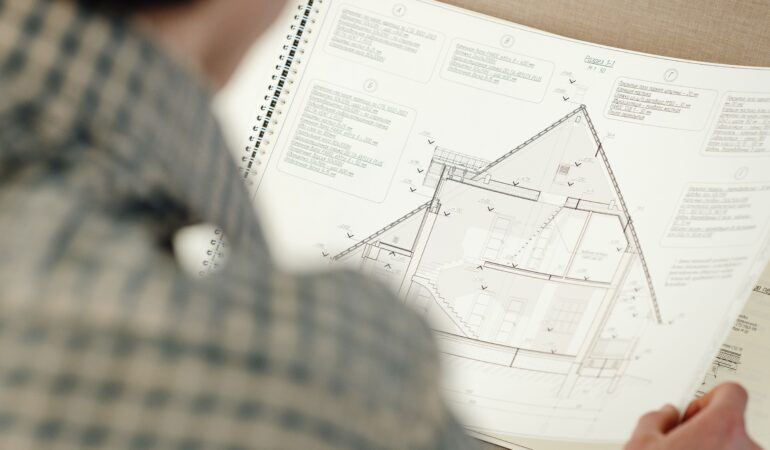
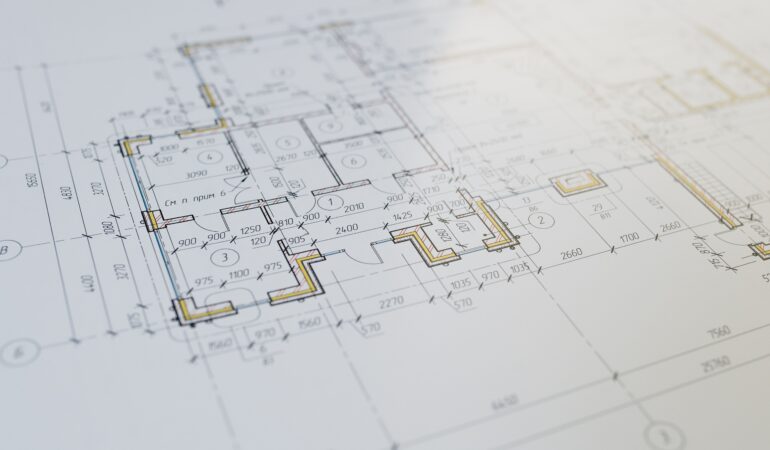
A complete permit set for a typical project includes architectural floor plans, reflected ceiling plans, exterior elevations, building sections, wall sections and construction details, a site plan, a code analysis and life safety plan, structural drawings stamped by a licensed structural engineer, and — depending on project scope and jurisdiction — civil, mechanical, electrical, plumbing, and energy compliance documentation.
This is not a single document. It is a coordinated package produced by multiple licensed professionals. Understanding this is the first step toward understanding why timelines are what they are.
The Honest Timeline: By Project Type
There is no single answer to how long permit drawings take, because project complexity varies enormously. What follows are realistic ranges based on professional practice — not optimistic best-case scenarios.
Small residential alterations and additions (under 500 sq ft)
Typical range: 3 to 6 weeks
Straightforward interior alterations, kitchen or bathroom remodels, small additions to existing residential structures. These projects require a limited sheet package — often architectural drawings only, with structural input limited to a few details or calculations rather than a full structural set. Timeline is driven primarily by architectural drafting and coordination with the structural engineer of record.
The three-week floor is realistic only when the design is fully resolved before documentation begins, the site has been measured and verified, and there are no existing-conditions surprises — concealed structural elements, unpermitted prior work, or utility conflicts — that require investigation.
Mid-size residential projects: new custom homes and substantial renovations (500–5,000 sq ft)
Typical range: 6 to 14 weeks
This is the category most relevant to luxury homeowners undertaking significant residential work. A new custom home or a whole-house renovation of meaningful scope requires a full architectural set, a complete structural package, and increasingly, MEP documentation depending on the jurisdiction and the project’s mechanical complexity.
Complexity drivers in this category include: highly custom detailing that requires non-standard drawing production; hillside or sloped site conditions requiring civil and geotechnical coordination; significant structural modifications to existing buildings, which require investigation of existing conditions before design can be finalized; and historic or architecturally sensitive properties with additional review requirements.
Commercial and mixed-use projects (up to 20,000 sq ft)
Typical range: 10 to 20 weeks
Commercial construction draws in the full complement of licensed disciplines. Architectural, structural, civil, mechanical, electrical, plumbing, and fire protection drawings must be produced, coordinated, and submitted as an integrated package. Each discipline has its own production timeline, and the coordination between them — resolving conflicts, aligning specifications, confirming code compliance across all systems — requires dedicated time that cannot be compressed without quality risk.
Tenant improvements in existing commercial buildings can be faster if the base building’s structural and MEP systems are well-documented and the scope is limited to interior work. Ground-up commercial construction or significant shell modifications should be planned at the longer end of this range.
Large-scale commercial and multi-family residential (20,000 sq ft and above)
Typical range: 4 to 9 months
At this scale, the drawing package itself is a substantial deliverable — often hundreds of sheets across multiple disciplines. BIM coordination, formal interdisciplinary review sessions, and multiple internal quality-control milestones are standard practice. Timeline compression at this scale carries material risk: coordination errors that would be caught in a thorough review process become RFIs and change orders during construction, at a cost that typically exceeds the savings from accelerating documentation.
The Five Phases That Make Up Your Total Timeline
Understanding where time is actually spent helps clients make informed decisions about where schedule pressure is and is not appropriate.
Phase 1: Pre-design and due diligence
Duration: 1 to 3 weeks
Before a line is drawn, a responsible firm conducts a due-diligence review: confirming zoning compliance, identifying applicable codes and local amendments, reviewing any existing survey or geotechnical data, and — for renovation projects — assessing existing conditions. This phase is frequently skipped or abbreviated by firms under schedule pressure. It is never worth skipping. Discoveries made in due diligence cost days to resolve. The same discoveries made during permit review cost months.
Phase 2: Schematic design
Duration: 2 to 5 weeks
The conceptual design phase, where massing, spatial organization, and primary design decisions are established. Permit drawings cannot begin until schematic design is sufficiently resolved — attempting to produce construction documents from an unresolved schematic is one of the primary causes of extended documentation timelines, as drawings must be repeatedly revised to reflect evolving design decisions.
The insider insight here: clients who invest adequate time in schematic design and arrive at a genuinely resolved design before construction documents begin consistently see faster, cleaner documentation phases. The pressure to “just start drawing” before the design is ready almost always produces a slower, more expensive outcome.
Phase 3: Design development
Duration: 2 to 6 weeks
Design development is the bridge between concept and construction document — the phase where materials are specified, systems are coordinated, structural approaches are confirmed, and the design is pressure-tested against code requirements and constructability constraints. On complex projects, this phase is where the most consequential technical decisions are made. Rushing through it to accelerate the permit set is a false economy.
Phase 4: Construction documents (permit drawings)
Duration: 3 to 12 weeks depending on project scale
This is the phase most clients are asking about when they ask about permit drawing timelines. It is the production phase — the conversion of a fully resolved design into the technical documentation required for permit submission. It involves parallel production tracks across all disciplines, coordination reviews, and a final quality-control check before submission.
The most important variable in this phase is design resolution: how thoroughly the preceding phases were completed. A fully resolved design produces a faster, cleaner CD phase. An unresolved design produces a CD phase that bleeds back into design development, extending the overall timeline unpredictably.
Phase 5: Permit review and response
Duration: 4 to 16 weeks, jurisdiction-dependent
This phase is outside the architect’s direct control but entirely within the architect’s influence. Permit review timelines vary significantly by jurisdiction — from as few as three weeks in smaller municipalities to twelve or more weeks in high-activity urban jurisdictions with review backlogs. The quality of the submitted drawings directly affects whether a first-round approval is achieved or whether one or more correction cycles are required, each adding four to eight additional weeks.
What Causes Timelines to Extend
In my experience, the following are the most consistent drivers of timeline extension — and all of them are manageable with proper planning.
Design changes during construction documents. When a client changes a significant design element after CD production has begun, revisions cascade across multiple sheets and disciplines. A single floor plan change can require updates to structural drawings, MEP coordination, energy compliance calculations, and multiple detail sheets. This is not the architect’s limitation — it is the nature of integrated technical documentation.
Incomplete or inaccurate existing conditions data. Renovation and addition projects depend on accurate as-built information. If existing conditions drawings are unavailable or unreliable, a field verification and as-built survey must be conducted — a process that can add one to three weeks to the pre-design phase and occasionally reveals concealed conditions that require design adjustment.
Delayed consultant deliverables. A permit set requires coordinated input from multiple licensed professionals. If a structural engineer, civil engineer, or MEP consultant misses a delivery milestone, the architectural set cannot be finalized. Firms with strong, established consultant relationships and clear contractual deliverable schedules manage this risk far better than those who engage consultants on an ad-hoc basis.
Jurisdictional complexity. Some jurisdictions require additional review layers beyond the standard building permit — coastal commissions, historic preservation boards, design review committees, or department of transportation approvals for projects affecting public right-of-way. Each adds time that must be planned for, not discovered mid-process.
Insider Tips: How to Protect Your Schedule
Lock the design before construction documents begin. The single most effective schedule protection available to a client is arriving at a fully resolved design before the CD phase starts. Discuss design freeze expectations explicitly with your architect at the outset of the project.
Engage all consultants at the start of design development, not at the start of CDs. Structural and MEP input that arrives late in the documentation process creates rework. Consultants engaged early enough to influence the design — rather than respond to it — produce better-coordinated, faster-to-produce drawings.
Build permit review time into your master schedule from the beginning. Permit review is not a brief administrative step. In many jurisdictions, it is the longest single phase in the pre-construction timeline. A project schedule that does not account for it realistically will produce a construction start date that is perpetually being revised.
Request a jurisdiction-specific timeline estimate from your architect. A firm with regular practice in your jurisdiction should be able to provide a reliable estimate of current review turnaround times, typical comment patterns, and whether a pre-application conference is advisable for your project type.
Do not conflate speed with competence. A firm that promises an unusually compressed timeline is either planning to skip phases, has not fully understood the project scope, or is telling you what you want to hear. Professional documentation takes the time it takes. What distinguishes excellent firms is not the ability to compress that time arbitrarily, but the ability to execute each phase efficiently and completely, minimizing the downstream delays that inadequate documentation reliably produces.
A Realistic Master Schedule: What to Tell Your Contractor
When structuring a pre-construction master schedule, the following framework is a useful starting point for a mid-size custom residential project:
Pre-design and due diligence: 2 weeks. Schematic design: 3 to 4 weeks. Design development: 3 to 4 weeks. Construction documents: 6 to 8 weeks. Permit submission and review: 6 to 10 weeks. Response to comments, if required: 2 to 4 weeks.
From first engagement to permit in hand: approximately five to seven months for a well-run project of this type in a standard-backlog jurisdiction. In high-backlog jurisdictions — major metropolitan areas with active development markets — seven to ten months is a more conservative and reliable estimate.
Clients who plan to this framework, and who work with a firm that executes each phase with discipline, consistently achieve their construction start targets. Clients who plan to a more optimistic schedule and encounter a single correction cycle or design revision typically do not.
Our team provides end-to-end architectural, structural, and MEP coordination to ensure your plans are compliant and ready for approval. Don’t let documentation delays hold you back.
Ready to turn your vision into a permit-ready project?
Frequently Asked Question - FAQs
For a very limited scope — a simple interior alteration with no structural work, in a jurisdiction with expedited review — a two-week drawing turnaround is technically possible. For any project involving new construction, significant structural modification, or a full discipline package, it is not realistic. A two-week promise on a complex project is either a scope misunderstanding or a quality risk. Ask specifically what will and will not be included in the package before accepting a compressed timeline.
Not necessarily, and this distinction matters. Drawing production speed and permit approval speed are different things. A firm can produce drawings quickly and still produce drawings that get rejected, extending the overall timeline beyond what a more thorough firm would have required. What you want is an efficient firm — one that executes each phase completely the first time, minimizes correction cycles, and has the permit review experience to produce submissions that reviewers can approve without comment.
Legitimate timeline differences between firms arise from staffing models (solo practitioners versus studios with dedicated production capacity), BIM versus 2D CAD workflows, consultant relationships, and quality-control processes. Some firms carry heavier project loads and have less dedicated capacity for any single project. When evaluating firms, ask specifically about current workload, who will be producing your drawings, and what the quality-control process looks like before submission.
In most jurisdictions, yes — to a degree. Many building departments offer expedited or over-the-counter review for qualifying projects, typically at a premium fee. Third-party plan check services, available in some jurisdictions, offer faster review turnarounds for certain project types. Pre-application conferences can reduce comment volume on the formal submission. And simply submitting a complete, well-prepared package — rather than a partial or under-documented set — is the single most reliable way to avoid the correction cycles that extend review timelines.
Building permits are issued with expiration dates — typically one to two years from issuance, though this varies by jurisdiction. If construction has not commenced by the expiration date, the permit lapses and a renewal or resubmission is required. In a jurisdiction where codes have been updated in the interim, a resubmission may require drawings to be revised to comply with the current code edition. This is an underappreciated risk for projects with financing contingencies or phased construction plans, and it should be accounted for in your project schedule..