
The $50,000 Mistake Most Property Owners Make
Last quarter, I consulted with a luxury homeowner who had already invested $47,000 in architectural drawings—only to discover during permit submission that their “complete” package was missing critical site documentation. The project stalled for six weeks while we scrambled to commission a proper site plan, costing them additional fees and delaying their construction timeline.
This scenario plays out more often than you’d think, and it stems from a fundamental misunderstanding: floor plans and site plans are not interchangeable, nor are they optional complements to one another. They serve distinctly different regulatory, technical, and design functions—and nearly every significant construction, renovation, or development project requires both.
As a Senior Principal Architect with over a decade navigating complex residential and commercial projects, I’ve seen firsthand how confusion between these two essential documents leads to costly delays, permit rejections, and compromised designs. In this comprehensive guide, I’ll demystify the critical differences between floor plans and site plans, explain when you need each (or both), and share insider knowledge that will save you time, money, and frustration.
Our team provides end-to-end architectural, structural, and MEP coordination to ensure your plans are compliant and ready for approval. Don’t let documentation delays hold you back.
Ready to turn your vision into a permit-ready project?
What Is a Floor Plan? The Interior Blueprint of Your Vision
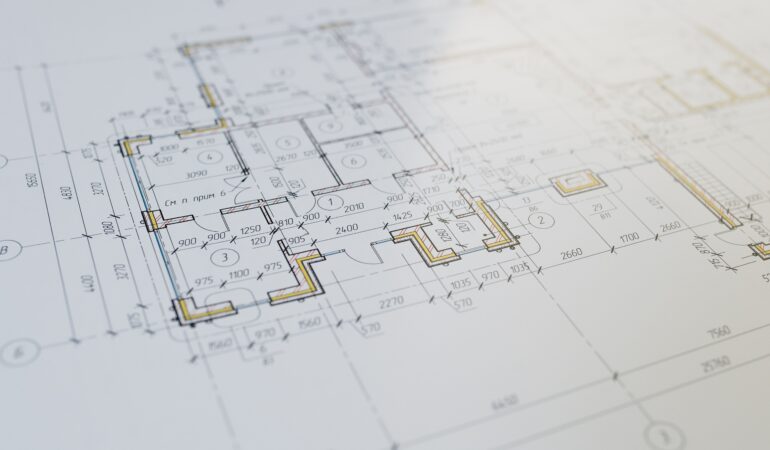
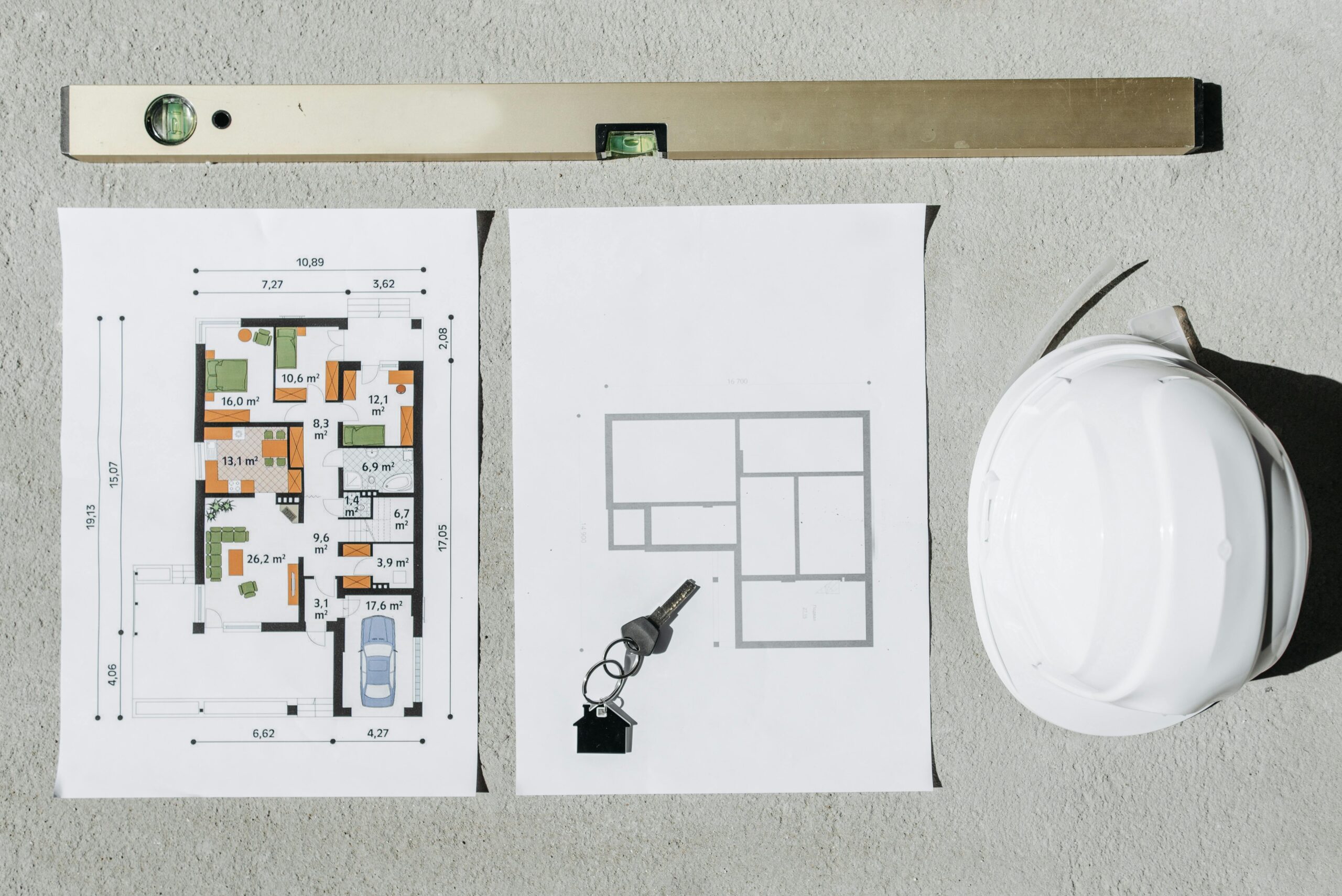
A floor plan is an orthographic projection—a scaled, two-dimensional drawing that depicts the interior layout of a building as viewed from above, typically with the roof and upper floors removed. Think of it as a horizontal “slice” through your structure at approximately four feet above the finished floor level.
Floor plans illustrate the spatial relationships within your building, showing:
- Room dimensions and configurations: Every bedroom, bathroom, kitchen, office, and circulation space with precise measurements
- Wall placements: Load-bearing walls versus partition walls, with thickness specifications
- Door and window locations: Including swing direction, rough opening dimensions, and header requirements
- Built-in fixtures and millwork: Cabinets, countertops, shelving, and architectural features
- Plumbing fixtures: Sinks, toilets, showers, and their connection points
- Mechanical elements: HVAC registers, electrical outlets, switches, and lighting fixtures
- Stairways and vertical circulation: Riser height, tread depth, and code-compliant handrails
- Floor material transitions: Where tile meets hardwood, carpet boundaries, and threshold details
The Professional Scope of Floor Plans
In professional practice, a comprehensive floor plan package typically includes multiple drawing sheets:
Demolition Plans (for renovations): What existing elements are being removed New Construction Plans: The proposed layout with all new elements clearly delineated Furniture Plans: Space planning that demonstrates functional room usage Reflected Ceiling Plans: Showing ceiling heights, soffits, beams, and lighting layouts Enlarged Plans: Detailed views of complex areas like kitchens, bathrooms, or custom millwork
Floor plans are fundamentally about interior spatial experience. They answer questions like: How does traffic flow through the home? Is the kitchen triangle efficient? Does the master suite have adequate privacy? Can furniture fit comfortably in the living room?
When Floor Plans Are Essential
You need detailed floor plans for:
- Interior renovations and remodels: Even if you’re not touching the exterior
- New construction of any habitable structure: From accessory dwelling units to luxury estates
- Commercial tenant improvements: Office build-outs, retail spaces, restaurants
- Permit applications: Building departments require floor plans to verify code compliance
- Construction bidding: Contractors need these to accurately estimate materials and labor
- Interior design and space planning: Before purchasing furniture or finalizing finishes
- Real estate marketing: High-quality floor plans significantly increase buyer interest
What Is a Site Plan? Your Property’s Geographic Context
Defining the Site Plan
A site plan (also called a plot plan or survey drawing) is a scaled, aerial view drawing that shows the entire property parcel and how your building relates to the land and surrounding context. While a floor plan looks inward, a site plan looks outward.
Site plans are geodetic documents, meaning they’re tied to real-world coordinates, property boundaries, and topographic data. They illustrate:
- Property boundaries and dimensions: The legal perimeter of your parcel with metes and bounds descriptions
- Building footprint location: Precisely where your structure sits on the lot
- Setback distances: Measured clearances from property lines (front, side, and rear)
- Existing and proposed topography: Elevation contours, slope percentages, and grade changes
- Driveways and parking areas: Access points, paving extents, and parking stall layouts
- Walkways and hardscape: Sidewalks, patios, decks, and outdoor circulation
- Landscaping elements: Trees (with caliper sizes), shrubs, lawn areas, and planting zones
- Utility locations: Water lines, sewer/septic, gas, electric, telecommunications
- Drainage systems: Swales, catch basins, French drains, retention/detention ponds
- Easements and encumbrances: Utility easements, access easements, right-of-ways
- Adjacent structures: Neighboring buildings that might affect solar access or privacy
- North arrow and scale: For orientation and accurate measurement
The Professional Scope of Site Plans
Professional site plans often require coordination with multiple specialists:
Licensed Land Surveyors: Provide the base survey with legal boundaries and existing conditions Civil Engineers: Design grading, drainage, and utility infrastructure Landscape Architects: Plan vegetation, irrigation, and outdoor amenities Architects: Ensure the building design integrates with site constraints
Site plans answer fundamentally different questions than floor plans: Where exactly can you build on this property? How will stormwater drain? Where do utilities connect? Does the design comply with zoning setbacks? How does the building relate to the street and neighbors?
When Site Plans Are Essential
You need a professional site plan for:
- Any new building construction: Single-family homes, commercial buildings, industrial facilities
- Building additions that change the footprint: Even a small bump-out may require updated setback verification
- Zoning and planning approvals: Before you can obtain a building permit
- Lot subdivisions or boundary adjustments: Creating new legal parcels
- Outdoor construction projects: Swimming pools, detached garages, sports courts, large decks
- Grading and drainage modifications: Altering existing topography or adding retention systems
- Driveway or access changes: New curb cuts or relocated entry points
- Environmental permitting: Wetland impacts, tree removal, stormwater management
- Title insurance and real estate transactions: Confirming improvements don’t encroach on easements or setbacks
The Critical Differences: A Side-by-Side Comparison
Aspect | Floor Plan | Site Plan |
Primary Focus | Interior spatial layout | Property context and exterior relationships |
Scale | Typically 1/4″ = 1′-0″ or 1/8″ = 1′-0″ | Typically 1″ = 10′, 1″ = 20′, or 1″ = 40′ |
Viewpoint | Inside the building looking down | Above the property looking down |
Key Measurements | Room dimensions, door widths, ceiling heights | Setbacks, lot coverage, easement locations |
Regulatory Function | Building code compliance (egress, accessibility) | Zoning compliance (density, coverage, setbacks) |
Primary Users | Contractors, interior designers, homeowners | Surveyors, civil engineers, planning departments |
Professional Preparer | Architects, designers, drafters | Land surveyors, civil engineers, architects |
Information Shown | Walls, doors, fixtures, finishes | Boundaries, topography, utilities, landscaping |
Legal Standing | Construction document, not legally recorded | Often based on recorded legal surveys |
Do You Need Both? The Short Answer Is Almost Always Yes
The Integrated Documentation Requirement
Here’s what most property owners don’t realize: building departments and permitting agencies don’t view floor plans and site plans as options—they view them as mandatory complementary documents.
A complete permit application package for new construction typically requires:
- Site Plan: Proves zoning compliance and site feasibility
- Floor Plans: Demonstrates building code compliance and interior layout
- Elevations: Shows exterior appearance and height
- Building Sections: Reveals vertical relationships and structural systems
- Foundation Plans: Details structural support
- Framing Plans: Specifies load paths and structural members
- MEP Plans: Mechanical, electrical, and plumbing systems
Notice that both site plans and floor plans appear in this essential set—neither alone suffices.
When You Might Need Only a Floor Plan
There are limited scenarios where a floor plan alone is adequate:
- Pure interior remodels with no exterior changes: Updating a kitchen or bathroom in an existing building where the footprint doesn’t change
- Tenant improvements in leased commercial space: When the landlord provides base building information
- Design development and space planning: Early conceptual work before formal permitting
- Furniture layouts and interior design: For aesthetic and functional planning
Even in these cases, having site documentation available is valuable for understanding context, utility locations, and structural constraints.
When You Might Need Only a Site Plan
Conversely, some projects require site plans without detailed floor plans:
- Lot evaluation before purchase: Understanding buildable area and constraints
- Preliminary zoning analysis: Determining if your project concept is feasible
- Outdoor-only projects: Landscaping, fencing, or paving that doesn’t involve buildings
- Simple accessory structures: Small sheds or pavilions where interior layout is minimal
However, the moment your project involves habitable space, heating, or plumbing, you’ll need floor plans as well.
The Synergy: Why Both Documents Work Better Together
The real magic happens when architects design floor plans and site plans in coordinated fashion:
Example 1 – Solar Orientation: Your floor plan might position large windows on the south side for passive solar gain, but the site plan reveals that’s where the neighbor’s two-story house sits fifteen feet away. An integrated approach rotates the building or adjusts the floor plan accordingly.
Example 2 – Topography Integration: Your floor plan shows a walkout basement, but the site plan’s topography indicates the lot slopes the wrong direction. Coordinated design either reworks the floor plan or incorporates retaining walls into the site plan.
Example 3 – View Optimization: The site plan identifies spectacular mountain views to the west, informing the floor plan to position living spaces with large windows on that side while keeping bedrooms quieter on the east.
This is why experienced architects develop both documents simultaneously, ensuring your interior spaces and site context work in harmony rather than conflict.
Insider Tips: What Architects Know That You Should Too
Common Mistake #1: Assuming Your Property Survey Is a Site Plan
Many homeowners believe the survey they received at closing is adequate for permitting. It’s not. A boundary survey shows property lines and existing improvements, but it rarely includes:
- Proposed building locations and setback dimensions
- Grading and drainage design
- Utility connection points
- Landscaping plans
- Compliance notes demonstrating zoning adherence
You’ll need your surveyor or civil engineer to prepare a formal site plan based on that survey.
Common Mistake #2: DIY Floor Plans for Permitted Work
Online software makes it easy to draft floor plans, but building departments increasingly reject amateur drawings that lack:
- Proper dimensioning conventions and notation
- Code-compliant egress calculations
- Structural member sizing and specifications
- Professional stamps (architect or engineer seal) when required by jurisdiction
What seems like a cost-saving measure often results in multiple resubmissions and delays that cost far more than hiring a professional initially.
Common Mistake #3: Overlooking Existing Conditions
Failing to document existing site and building conditions accurately leads to design conflicts during construction. Professional architects conduct thorough field measurements and verify:
- Actual property dimensions (surveys can have errors)
- As-built locations (existing buildings may not match recorded plans)
- Utility locations (always call 811 before digging)
- Site constraints (drainage patterns, tree locations, rock outcroppings)
Common Mistake #4: Ignoring Zoning Beyond Setbacks
Setbacks are just the beginning of zoning compliance. Site plans must also demonstrate:
- Lot coverage ratios: The percentage of your lot covered by buildings and impervious surfaces
- Floor area ratio (FAR): Total building square footage relative to lot size
- Height limits: Maximum building height measured from various datum points
- Parking requirements: Minimum spaces based on use and square footage
- Landscape requirements: Minimum percentages of living vegetation
- Tree preservation: Protecting significant existing trees or mitigation planting
Your site plan must prove compliance with all these factors.
Insider Tip: Front-Load Your Due Diligence
Before investing in complete floor plans and site plans, consider a preliminary feasibility study. For a fraction of the full design cost, an architect can:
- Review your zoning and site constraints
- Develop conceptual massing studies
- Identify potential red flags or opportunities
- Provide preliminary cost projections
- Advise on permitting timeline and complexity
This modest upfront investment can prevent expensive design work on an infeasible project.
The Process: How Floor Plans and Site Plans Come Together
Phase 1: Site Analysis and Programming (Weeks 1-2)
Your architect begins by analyzing the site plan context:
- Reviewing the survey and visiting the property
- Understanding topography, views, solar orientation, and prevailing winds
- Identifying opportunities and constraints
- Meeting with you to establish project goals, required spaces, and budget
Phase 2: Schematic Design (Weeks 3-6)
The architect develops preliminary floor plans and site plans in tandem:
- Exploring multiple layout options
- Positioning the building optimally on the site
- Coordinating interior spaces with exterior conditions
- Producing simple 3D visualizations to help you understand the design
Phase 3: Design Development (Weeks 7-12)
Refining the chosen design direction:
- Detailed floor plans with dimensions and specifications
- Finalized site plan with grading and utility design
- Material selections and architectural details
- Structural and systems coordination
Phase 4: Construction Documents (Weeks 13-20)
Creating permit-ready, buildable drawings:
- Complete floor plan set with all architectural details
- Engineered site plan with civil specifications
- Building sections, elevations, and details
- Coordinated MEP (mechanical, electrical, plumbing) plans
- Specifications and notes for contractors
Phase 5: Permitting and Bidding (Weeks 21-28)
Shepherding your project through approvals:
- Submitting to planning/zoning for site plan approval
- Submitting to building department for construction permits
- Addressing review comments and making revisions
- Distributing complete sets to contractors for competitive bidding
The Investment: What Should You Expect to Pay?
Site Plan Costs
Site plan preparation involves multiple professionals:
- Boundary Survey: $500-$2,500 depending on lot size and complexity
- Topographic Survey: $1,000-$5,000 for contour mapping
- Civil Engineering Site Plan: $2,500-$10,000 for grading, drainage, and utility design
- Landscape Architecture: $2,000-$15,000+ for comprehensive landscape plans
Total site plan package: $5,000-$30,000+ for residential projects. Commercial and complex sites can exceed $50,000.
Floor Plan Costs
Architectural floor plan development varies dramatically by project scope:
- Simple renovation floor plans: $2,000-$8,000
- Custom home design (complete plan set): $15,000-$75,000+
- Luxury estate (5,000+ sf): $50,000-$150,000+
- Commercial tenant improvement: $10,000-$100,000+ depending on size and complexity
These ranges include schematic design through construction documents, not just floor plans alone.
The Value Proposition
While these figures might seem substantial, consider the alternatives:
- Design-build without architect involvement: Often results in generic designs, inefficient layouts, and missed opportunities for your site
- Permit rejection and resubmission: Delays cost thousands in holding costs and can lose favorable interest rates
- Construction change orders: Poor documentation leads to field changes that cost 3-5x more than getting it right on paper
- Resale value: Professional design adds 5-15% to property value compared to amateur or generic construction
Quality floor plans and site plans aren’t expenses—they’re investments that return value throughout the life of your project.
How to Choose the Right Professional
For Floor Plans: Architect vs. Designer vs. Drafter
- Licensed Architects: Required for commercial projects and larger residential (varies by state). Provide comprehensive design services, structural coordination, and code expertise. Higher cost but lower risk.
- Residential Designers: Specialize in homes, often more affordable than architects, but may lack engineering integration or commercial experience.
- Drafters: Translate your ideas into drawings but typically don’t provide design services or professional liability coverage.
For any significant project, an architect’s training in building science, structural principles, and code compliance is invaluable.
For Site Plans: Civil Engineer vs. Surveyor vs. Architect
- Licensed Land Surveyors: Essential for boundary surveys and legal property documentation. May prepare basic site plans for simple projects.
- Civil Engineers: Specialize in grading, drainage, utilities, and infrastructure. Required for complex topography or large-scale development.
- Architects: Can prepare site plans for straightforward projects, often coordinating with surveyors for base information.
Many projects benefit from a team approach: surveyor for base mapping, civil engineer for grading/utilities, landscape architect for planting, all coordinated by the architect.
Questions to Ask Before Hiring
- “How many projects similar to mine have you completed in this jurisdiction?” Local experience means understanding specific zoning quirks and building department preferences.
- “What professional licenses and insurance do you carry?” Verify architect/engineer licensure and adequate professional liability coverage.
- “What deliverables are included in your fee?” Some firms charge separately for revisions, permit resubmissions, or construction administration.
- “What is your typical timeline for design and permitting?” Unrealistic schedules often signal inexperience with the approval process.
- “Can you provide client references for similar projects?” Speaking with past clients reveals communication style and problem-solving approach.
Conclusion: The Foundation of Successful Projects
Floor plans and site plans aren’t bureaucratic paperwork—they’re the foundational language of construction, the contract between vision and reality. A floor plan without site context is like designing a boat without considering the water it will sail on. A site plan without floor plans is like buying land without knowing what you’ll build.
The property owners who succeed are those who recognize that comprehensive documentation isn’t a cost to be minimized but rather the blueprint for avoiding far more expensive mistakes during construction. Whether you’re developing a luxury estate, a commercial office building, or a simple home addition, the question isn’t whether you need both floor plans and site plans—it’s whether you’re ready to work with professionals who can create them in harmony.
The $50,000 mistake I mentioned in the introduction? It wasn’t really about the additional site plan cost. The real cost was the six-week delay during peak construction season, the lost contractor availability, and the homeowner’s lingering doubt about whether other shortcuts had been taken. That’s the price of incomplete documentation.
When you invest in comprehensive floor plans and site plans from the outset, developed by experienced professionals who understand how these documents must work together, you’re not just buying drawings. You’re buying certainty, efficiency, and the confidence that your vision can become reality exactly as you imagined it.
Our team provides end-to-end architectural, structural, and MEP coordination to ensure your plans are compliant and ready for approval. Don’t let documentation delays hold you back.
Ready to turn your vision into a permit-ready project?

Fayaz
Frequently Asked Question - FAQs
No, in most cases. Existing floor plans from real estate listings or previous owners typically lack the technical detail, dimensions, and code compliance notation required for permit applications. Building departments need construction-grade drawings that show existing conditions, demolition scope, and new construction with full dimensions and specifications. You'll need to commission new floor plans that document current conditions and your proposed changes, even if you have older drawings available.
Approval timelines vary dramatically by jurisdiction and project complexity. Simple residential renovations in efficient jurisdictions might clear in 2-4 weeks, while complex commercial projects in congested cities can take 3-6 months or longer. Factors affecting timeline include: project size and use type, zoning compliance (straightforward vs. requiring variances), completeness of initial submittal, building department workload, and whether you need multiple agency approvals (planning, zoning, building, fire, health department). Work with an architect familiar with your local jurisdiction—they can provide realistic timelines and navigate the approval process efficiently.
Requirements vary by state and project type. Many jurisdictions allow homeowners to prepare their own drawings for single-family residences they'll occupy, though amateur drawings often face rejection and multiple resubmissions. Most states require licensed architects or engineers for: commercial buildings, multi-family residential beyond duplexes, buildings over certain square footages (often 3,000-5,000 sf), or any structure requiring engineered systems. Site plans involving grading, drainage design, or utility infrastructure typically require a licensed civil engineer. Even when not legally required, professional preparation dramatically increases approval likelihood and construction quality. The modest additional investment in professional services is almost always recovered through fewer change orders and faster approval.
A survey (boundary survey or ALTA survey) is a legal document prepared by a licensed land surveyor that shows property boundaries, existing improvements, easements, and encumbrances as they currently exist. It's a record of "what is." A site plan is a design and engineering document that shows "what is proposed"—including the survey information as a base, but adding your new building location, grading design, drainage systems, utility connections, landscaping, and compliance with zoning regulations. Think of it this way: the survey tells you where your property lines are; the site plan shows how you'll develop within those lines while meeting all regulatory requirements.
Absolutely not. Building permits require both documents because they address different regulatory requirements—floor plans for building code compliance, site plans for zoning compliance. More importantly, site work (clearing, grading, utility connections) must happen before or concurrent with building construction. Starting without an approved site plan risks: violating zoning setbacks (requiring expensive building relocation or demolition), improper drainage causing foundation problems, utility conflicts requiring costly rerouting, and immediate stop-work orders with daily fines. Always obtain complete permit approval for both floor plans and site plans before breaking ground.