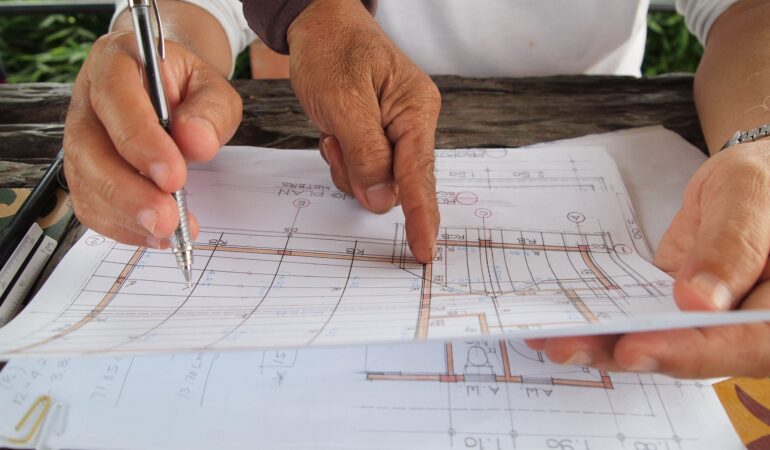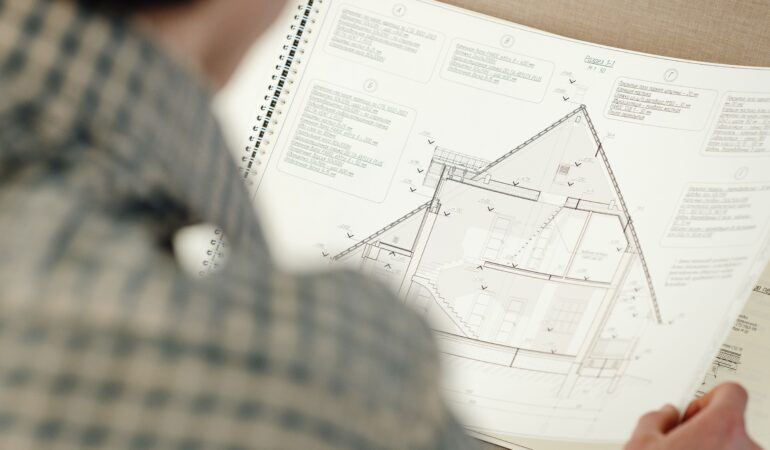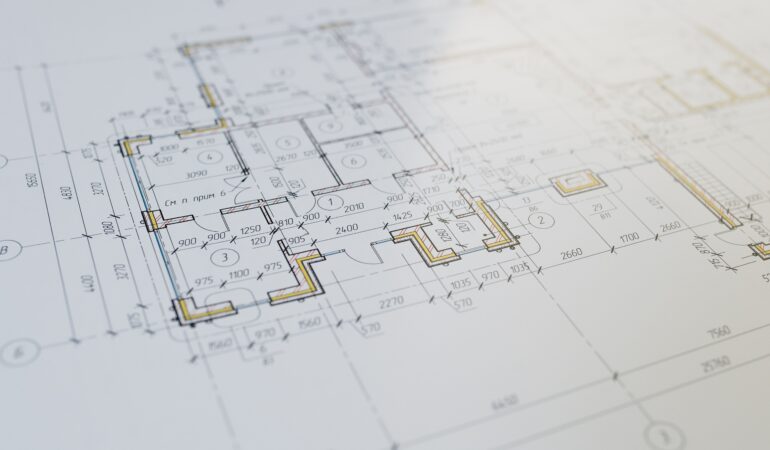


Here is a conversation that happens more often than it should. A homeowner or developer, trying to manage project costs intelligently, hires an architectural designer — or a design-build contractor with an in-house CAD technician — to produce their permit drawings. The drawings look professional. The pages are formatted correctly. The plans are submitted. And then the jurisdiction rejects them at intake, or worse, flags them mid-review, because the documents are not stamped by a licensed architect or engineer as required by law.
Now the project is delayed. The original fees are largely sunk. And the client must hire a licensed professional to either heavily revise or completely redraw the set — often under time pressure and at a premium rate.
This scenario is preventable. It stems from a genuine and understandable confusion about what architects and architectural designers actually do, what the law requires, and where the legitimate use cases for each begin and end. This guide gives you the clarity to make the right hiring decision the first time.
Our team provides end-to-end architectural, structural, and MEP coordination to ensure your plans are compliant and ready for approval. Don’t let documentation delays hold you back.
Ready to turn your vision into a permit-ready project?
The Core Distinction: Licensure and Legal Authority
The single most important difference between a licensed architect and an architectural designer is not skill, not software proficiency, and not the quality of the drawings they produce. It is legal authority.
A licensed architect has satisfied the requirements of their state’s architectural licensing board — typically a accredited professional degree, a defined period of documented internship experience under licensed supervision, and passage of the Architect Registration Examination (ARE), a multi-division national licensing examination. Upon licensure, an architect is legally authorized to stamp and sign construction documents, certifying that the documents were prepared under their responsible control and that they represent a competent standard of care.
That stamp — the architect’s seal — is a legal instrument. It is the architect’s professional certification that the documents comply with applicable codes, that the design does not endanger public health and safety, and that the architect accepts professional liability for the work. It is backed by the architect’s license, which can be suspended or revoked for negligence, and by their professional liability (errors and omissions) insurance.
An architectural designer has none of this. A designer — regardless of their technical skill, years of experience, or the sophistication of their CAD or BIM output — is a production professional. They translate design intent into drawn documentation. They do not hold a license. They cannot legally stamp drawings. They cannot certify code compliance. And they carry no professional liability for the accuracy or safety of the documents they produce.
What an Architectural Designer Actually Does
To be precise: architectural designers are valuable professionals. On a well-functioning project team, experienced designers and BIM technicians are indispensable — they produce the volume of detailed documentation that a complex project requires, working under the direction and review of licensed architects and engineers.
The key phrase is under the direction and review of. This is the legal and ethical framework within which designer work is valid. When a licensed architect exercises responsible control — meaning they have detailed professional knowledge of the content of the drawings, have directed their preparation, and have reviewed them before stamping — the designer’s production work becomes part of a legitimate, stamped document set.
What designers typically do on a project team includes translating sketch designs into precise CAD or Revit drawings, coordinating drawing sheet layouts and title blocks, producing construction details from architect-provided sketches or standard details, maintaining drawing files and revision records, and preparing documents for submission formatting.
What designers cannot legally do, in any jurisdiction, is independently prepare and certify permit drawings without the oversight and stamp of a licensed professional.
When Is a Licensed Architect Legally Required?
This is where many clients get into trouble, because the answer varies by jurisdiction and project type — and the exceptions are narrower than most people assume.
The General Rule: Most Inhabited Buildings Require a Licensed Architect
In virtually every U.S. state, construction documents for new buildings, additions, and significant alterations to inhabited structures must be prepared by or under the responsible control of a licensed architect (or in some cases, a licensed engineer, depending on the project type and state law). The specific thresholds vary, but the default presumption for any project involving habitable space, public access, or structural modifications is that licensure is required.
Exemptions: Where They Exist and What They Actually Cover
Most states carve out exemptions from the architect-of-record requirement for certain project types. These typically include single-family residences below a defined square footage threshold, agricultural structures, minor alterations or repairs below a cost threshold, and certain industrial or warehouse structures.
However, these exemptions are frequently misunderstood in ways that create real risk.
The exemption applies to the permit requirement, not to the quality of work or the jurisdiction’s intake standards. Even in a jurisdiction where a single-family home below 5,000 square feet does not legally require architect-stamped drawings, the building department may still require documentation that demonstrates code compliance — and producing that documentation competently, especially for anything beyond the most straightforward construction, demands professional knowledge that a designer does not possess.
Exemptions do not protect you from liability. If an un-stamped structure has a design deficiency that results in property damage, personal injury, or a failed inspection, the homeowner bears the liability that a licensed professional’s stamp and insurance would otherwise have addressed. Title insurance companies and mortgage lenders are increasingly scrutinizing whether permit drawings carry the appropriate professional certification.
Local jurisdictions can be more restrictive than state law. A state exemption for small residential structures does not obligate your city or county to accept un-stamped drawings. Many jurisdictions with active plan check departments require professional stamps regardless of state-level exemptions. Verify locally before assuming the exemption applies.
The Responsible Control Standard: What It Actually Means
The concept of responsible control is central to understanding the architect-designer relationship, and it is more demanding than many assume.
The National Council of Architectural Registration Boards (NCARB) defines responsible control as the amount of control over and detailed professional knowledge of the content of technical submissions during their preparation that is ordinarily exercised by a licensed architect. This definition has real teeth. An architect cannot legitimately stamp drawings they have not substantively reviewed and directed. Rubber-stamping a designer’s independently prepared work — without detailed review and professional engagement — is an ethics violation and, in most states, a licensing board violation.
This matters for clients in two ways. First, it means that the legitimate use of a designer’s work requires genuine architectural oversight — which means you are paying for both the designer’s production time and the architect’s review and direction time. Trying to use a designer to avoid architect fees rarely achieves the cost savings clients expect when the project actually requires a licensed architect. Second, it means that when you hire a firm and the principal architect’s stamp appears on your drawings, that architect has a legal and ethical obligation to have actually directed and reviewed the work — a standard of accountability that protects you.
Common Project Types and Who You Need
Custom Single-Family Residence
Who you need: A licensed architect, in almost every meaningful sense. While some state exemptions technically permit un-stamped drawings for smaller homes, the design complexity, structural coordination, energy compliance documentation, and code analysis involved in a custom home warrant professional authorship. Clients who attempt to use a designer or design-build CAD technician as a substitute for an architect on a custom home routinely encounter plan check rejections, structural deficiencies discovered during construction, and documentation that does not adequately protect their interests.
ADU (Accessory Dwelling Unit)
Who you need: A licensed architect in most jurisdictions, particularly given that ADUs are classified as new dwelling units and carry the code compliance burden of habitable residential structures. Some jurisdictions accept simpler documentation for certain ADU types, but the entitlement analysis, energy compliance documentation, and structural coordination involved in even a straightforward ADU benefits substantially from licensed professional authorship.
Multi-Family Residential (Apartments, Condominiums)
Who you need: A licensed architect, without exception. IBC-governed multi-family projects involve occupancy analysis, egress design, fire protection systems, and accessibility compliance under Fair Housing Act and ADA provisions — none of which a designer is qualified or legally authorized to certify.
Commercial Tenant Improvement
Who you need: Almost always a licensed architect. Even relatively modest commercial tenant improvements — new demising walls, restroom additions, changes to means of egress — typically require stamped drawings in most jurisdictions. The occupancy classification analysis and fire and life safety implications of commercial alterations are not appropriate for unlicensed documentation.
Residential Interior Remodel (No Structural Work)
Who you need: This is the most legitimate use case for designer-prepared or designer-prepared documents, depending on jurisdiction. Many jurisdictions permit unlicensed designers or designers to prepare documents for non-structural interior alterations — reconfiguring non-load-bearing walls, updating finishes, replacing fixtures. Even here, careful verification with the local building department is essential before engaging a designer as the sole documentation professional.
The Cost Argument: Why Hiring a Designer to Save Money Often Costs More
The most common reason clients consider a designer over a licensed architect is cost. Designer hourly rates are lower than architect rates. On a surface-level analysis, this appears to offer savings.
In practice, for projects that require licensed professional authorship, the calculation inverts quickly.
When a designer-prepared set is rejected at permit intake, or generates extensive correction letters because the documents do not demonstrate adequate code compliance knowledge, the client pays to have the set revised or replaced — typically by a licensed architect who now has to work from someone else’s drawings, which is invariably less efficient than starting clean. The sunk cost of the designer fees does not disappear. It compounds.
Beyond the permitting risk, there is the construction risk. A permit drawing set that is technically approvable but professionally thin — light on construction details, vague on structural conditions, silent on material specifications — creates ambiguity that contractors will resolve in their own interests, not the client’s. Change orders, disputes, and quality shortfalls on site are frequently traceable to inadequate documentation.
The legitimate cost optimization is not choosing between an architect and a designer — it is choosing the right architectural firm, one that uses experienced production staff efficiently under genuine professional oversight, and engaging them at the right project scale.
Insider Tips: What Sophisticated Clients Know
Ask specifically who will stamp the drawings. When engaging a firm, ask directly: which licensed architect will be the architect of record, and what is their level of involvement in the project? In some firms, junior staff or outside consultants produce the bulk of the work and a principal stamps with minimal review. This is ethically problematic and professionally risky. You want the stamping architect to be genuinely engaged in your project.
Verify licensure independently. Every state maintains a public database of licensed architects through its architectural licensing board. Verifying that the professional you are engaging holds a current, active license in the state where your project is located takes minutes and eliminates a category of risk. License status, including any disciplinary history, is typically public record.
Design-build contractors with in-house designers are not a substitute. Some design-build firms offer “in-house design services” staffed by designers or unlicensed designers, with a licensed architect engaged nominally for stamping. Depending on the degree of responsible control that architect actually exercises, this arrangement may range from legitimate to ethically problematic. Ask how the stamping architect is involved in the preparation of the documents — not just the signature page.
The architect’s stamp is also your liability protection. When a licensed architect stamps your permit drawings, they are accepting professional responsibility for the adequacy of those documents. Their errors and omissions insurance is a financial backstop if a design deficiency causes damage. An unlicensed designer carries no equivalent accountability. For a project representing a significant capital investment, that protection has real value.
Our team provides end-to-end architectural, structural, and MEP coordination to ensure your plans are compliant and ready for approval. Don’t let documentation delays hold you back.
Ready to turn your vision into a permit-ready project?
Frequently Asked Question - FAQs
In most jurisdictions, the permit application itself can be submitted by the property owner, a licensed contractor, or the design professional of record — and a designer could physically submit documents on behalf of a licensed architect. However, the documents submitted must bear the stamp of a licensed architect or engineer where required by law. A designer cannot submit un-stamped drawings as the responsible design professional for projects that require licensed authorship. Attempting to do so is a misrepresentation to the building department and creates significant legal exposure for the property owner.
The title "architectural designer" typically refers to someone with architectural education — often a professional degree — who has not yet completed licensure requirements or has chosen not to pursue licensure. Architectural designers can produce highly competent design work, but they cannot stamp construction documents or serve as architect of record. Some firms employ architectural designers in design leadership roles while a licensed principal serves as architect of record with genuine responsible control. The key question is always whether a licensed architect with actual professional knowledge of the project has reviewed and stamped the documents.
Yes, in specific circumstances. For projects that fall within a jurisdiction's exemption from the licensed architect requirement — certain small residential structures, agricultural buildings, or minor non-structural alterations — a drafter may legally prepare and submit permit documents. The exemption thresholds vary significantly by state and locality, and the building department's intake requirements may be more demanding than the state minimum. Before engaging a drafter as the sole documentation professional on any permit project, verify the specific exemption provisions in your jurisdiction and confirm with the building department that unlicensed documents will be accepted for your project type.
Every state's architectural licensing board maintains a publicly searchable database of licensed professionals. You can search by name, license number, or firm to verify that a license is current and active, confirm the license covers the state where your project is located (some architects hold multi-state licensure through reciprocity), and review any disciplinary history associated with the license. NCARB also maintains a national directory of registered architects. This verification takes minutes and is a standard due diligence step for any significant project engagement.
In some states and for certain project types, a licensed structural or civil engineer can stamp and serve as the engineer of record for construction documents — particularly for projects that are primarily structural in nature, such as industrial buildings or certain agricultural structures. However, for inhabited buildings with significant architectural program — residential, commercial, mixed-use — the scope of an engineer's licensure typically covers structural systems, not the full breadth of architectural design, code compliance, accessibility, and life safety analysis that a complete permit drawing set requires. Relying on an engineer stamp as a substitute for an architect on a project that requires architectural authorship creates gaps in professional accountability that can surface during plan check or construction. Always verify what your specific jurisdiction requires for the specific project type.